
There is something quietly powerful about a last name that has already survived two thousand years. Latin last names carry the echo of marble forums, legionary standards, and family lines that helped shape an empire, and they still land with real weight on a modern character, a pen name, or a family tree.
Maybe you are naming a character for a novel set in ancient Rome and you want a surname that would genuinely fit the period. Maybe you want a last name with a meaning you can point to, like lucky, golden, or greatest. Or maybe your own surname traveled through Spanish or Portuguese from an old Latin word for a riverbank or a tower, and you want to know the story behind it.
This guide gathers 37 Latin last names in three groups: historic Roman family names, descriptive Latin cognomina with clear meanings, and modern surnames with Latin roots. Each entry includes its meaning, origin, and style, and uncertain origins are flagged honestly instead of being dressed up as established fact.
What Are Latin Last Names?
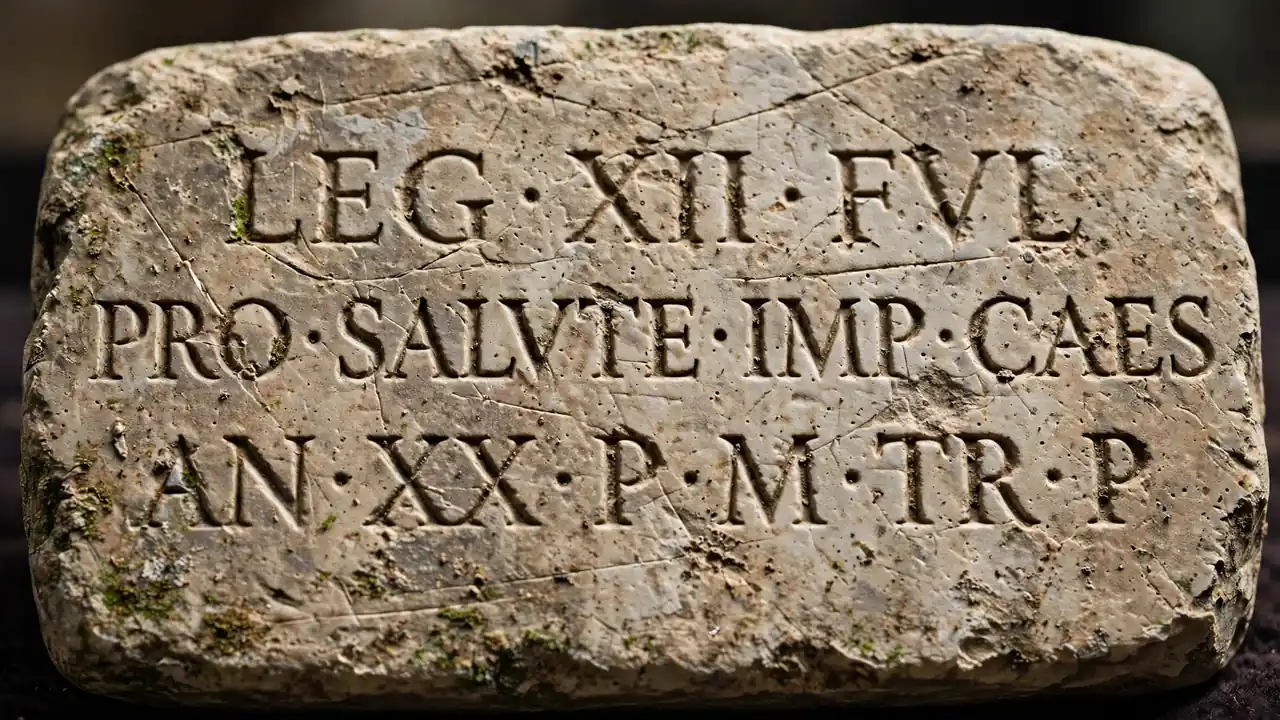
Latin last names fall into three groups. Ancient Roman family names like Aurelius, Julius, and Cornelius come from Rome’s clan system. Descriptive Latin cognomina like Felix (lucky), Maximus (greatest), and Rufus (red-haired) began as epithets. Modern surnames like Rivera, Cruz, and Flores reached us through Spanish and Portuguese, which evolved from Latin. They suit characters, pen names, and family research.
Below you will find all three groups with meanings, origins, pronunciations, and style notes, plus a shortlist of the eight strongest picks if you want a quick decision.
Latin Last Names at a Glance

Use this overview to jump to the group that fits your purpose, then explore the full lists underneath.
| Category | Names | Examples | Best for |
| Historic Roman family names | 14 | Aurelius, Julius, Cassius, Pompeius | Ancient Rome settings and formal characters |
| Descriptive Latin cognomina | 14 | Felix, Maximus, Rufus, Corvinus | Choices where meaning matters most |
| Latin-rooted Romance surnames | 9 | Rivera, Cruz, Flores, Torres | Modern, real-world use |
Historic Roman Family Names

Ancient Rome used a naming system quite different from the modern first-name plus last-name structure. A Roman citizen might carry a personal name, a clan or family name called the nomen, and a distinguishing cognomen. The surnames below come from that historical tradition, although a few later became given names as well.
Aurelius
Meaning: Golden or gilded.
Origin: Ancient Roman, derived from Latin aureus.
Pronunciation: Aw-REE-lee-us or uh-REE-lee-us in American English.
Style: Classical, distinguished, and historically established.
Why it appeals: The meaning has a clear linguistic basis, and the name is strongly associated with Marcus Aurelius, the Roman emperor and philosophical writer, so it carries genuine historical weight.
Cornelius
Meaning: Traditionally connected with Latin cornu, meaning horn, though the derivation is not certain.
Origin: Ancient Roman family name.
Pronunciation: Kor-NEE-lee-us.
Style: Formal, traditional, and recognizable in English.
Why it appeals: The Cornelii were a prominent Roman clan, giving this name a documented connection to Roman political and family history.
Flavius
Meaning: Yellow, blond, or golden-haired.
Origin: Ancient Roman family name derived from Latin flavus.
Pronunciation: FLAY-vee-us in English, approximately FLAH-wee-oos in Classical Latin.
Style: Imperial, classical, and distinctive.
Why it appeals: Flavius was the family name of the emperors Vespasian, Titus, and Domitian, tying it directly to the history of the Roman Empire.
Octavius
Meaning: Eighth.
Origin: Ancient Roman family name derived from Latin octavus.
Pronunciation: Ok-TAY-vee-us in American English, approximately ok-TAH-wee-oos in Classical Latin.
Style: Formal, historical, and elaborate.
Why it appeals: Octavius was the original family name of Augustus before he became Rome’s first emperor, making it a particularly identifiable historical surname.
The remaining names in this category preserve Roman family or clan connections. Their meanings range from reasonably clear Latin derivations to etymologies that remain uncertain.
| Name | Meaning | Origin | Style |
| Fabius | Associated with Latin faba, bean | Ancient Roman | Traditional, historical |
| Julius | Ancient family name; ultimate derivation uncertain | Roman | Familiar, classical |
| Claudius | Possibly related to claudus, lame | Roman; possibly connected with an older Sabine name | Formal, imperial |
| Valerius | Associated with Latin valere, to be strong | Ancient Roman | Stately, traditional |
| Aemilius | Traditionally connected with Latin aemulus, rival | Ancient Roman | Formal, aristocratic |
| Tullius | Roman family name; meaning uncertain | Ancient Roman | Literary, historical |
| Marcius | Roman family name associated with the Marcii | Ancient Roman | Classical, dignified |
| Cassius | Possibly derived from Latin cassus, empty; derivation uncertain | Ancient Roman | Concise, historic |
| Domitius | Probably related to Latin domitus, tamed | Ancient Roman | Formal, distinctive |
| Pompeius | Historic Roman family name; etymology uncertain | Ancient Roman | Grand, historical |
The historical identity of these names is generally more secure than every proposed explanation of their meanings. Roman naming references document the clan-name system and note that family names could originate from words, personal names, physical traits, or regional languages.
Latin Surnames With Clear, Descriptive Meanings
Some Roman cognomina began as distinguishing names or epithets. They could refer to physical characteristics, personal qualities, or other identifying traits, and over time certain cognomina became hereditary family names. This group is the most useful when meaning matters as much as historical background.
Felix
Meaning: Lucky, fortunate, or successful.
Origin: Latin, used as an ancient Roman cognomen.
Pronunciation: FEE-liks in American English, approximately FEH-leeks in Classical Latin.
Style: Short, crisp, and versatile.
Why it appeals: Its positive meaning comes directly from Latin, and its established use in Roman naming makes it more than a modern word-name invention.
Maximus
Meaning: Greatest.
Origin: Ancient Roman cognomen derived from Latin maximus, the superlative of magnus.
Pronunciation: MAK-suh-mus in American English, approximately MAHK-see-moos in Classical Latin.
Style: Strong, formal, and dramatic.
Why it appeals: The meaning is directly supported by Latin, and Maximus is a documented Roman cognomen rather than a surname created for a modern historical aesthetic.
Rufus
Meaning: Red-haired.
Origin: Latin, ancient Roman cognomen.
Pronunciation: ROO-fus in American English, approximately ROO-foos in Classical Latin.
Style: Compact, vintage, and recognizable.
Why it appeals: Rufus shows how Roman distinguishing names could describe a physical feature, giving it a concrete and memorable origin story.
Magnus
Meaning: Great.
Origin: Latin, recorded as an ancient Roman cognomen.
Pronunciation: MAG-nus in American English, approximately MAHG-noos in Classical Latin.
Style: Bold, simple, and traditional.
Why it appeals: Magnus has a transparent Latin meaning and historical use as an epithet, including in Carolus Magnus, the Latin form of Charlemagne’s name.
These names have documented connections to Latin vocabulary. Some may also appear as given names in modern use.
| Name | Meaning | Origin | Style |
| Faustus | Fortunate, lucky, or auspicious | Latin cognomen | Distinctive, classical |
| Primus | First | Latin cognomen | Short, traditional |
| Brutus | Traditionally heavy in Latin | Roman cognomen | Stark, historical |
| Crescens | Growing or increasing | Derived from Latin crescere, to grow | Unusual, classical |
| Albus | White or bright | Latin cognomen | Minimal, ancient |
| Balbus | Stammerer | Latin cognomen | Rarely used as a modern-style surname; historical |
| Rusticus | Rural or rustic | Latin cognomen | Earthy, old-world |
| Severus | Severe or stern | Latin adjective used as a Roman name | Formal, imperial |
| Longus | Long or tall | Latin cognomen | Simple, descriptive |
| Corvinus | Raven-associated; derived from corvus, raven | Ancient Roman family-name form | Dramatic, literary |
These historical meanings are not necessarily modern personality descriptions. Brutus and Balbus began as descriptive names, so read their translations in the original linguistic and historical context rather than as comments on anyone today.
Latin-Rooted Surnames in Spanish and Portuguese
Not every surname with Latin ancestry is an ancient Roman family name. Spanish and Portuguese developed from Latin, so their surnames can preserve older Latin vocabulary through centuries of linguistic change. The names below broaden this guide for readers who want surnames with both Latin roots and established modern usage.
Rivera
Meaning: Associated with a water-side place or a location called Rivera.
Origin: Spanish, with related Catalan and Italian surname forms; the Spanish etymology is linked to ribera, from Late Latin riparia.
Pronunciation: Ri-VAIR-uh in common American English, approximately ree-BEH-rah in Spanish.
Style: Familiar, flowing, and geographically rooted.
Why it appeals: Rivera has documented Spanish and Italian surname histories, and its place-name origins give a concrete connection to landscape. Exact histories can differ between families and regions.
Cruz
Meaning: Cross.
Origin: Spanish and Portuguese, from cruz, ultimately derived from Latin crux.
Pronunciation: Krooz in common American English, approximately kroos in Spanish.
Style: Short, direct, and traditional.
Why it appeals: Cruz has a clear linguistic connection to Latin and documented surname use in Spanish- and Portuguese-speaking communities. Some family histories connect it with a cross or a place named for one.
Flores
Meaning: Flowers, or a surname associated with a flower-related byname.
Origin: Spanish and Portuguese; the Spanish form is documented as a variant influenced by flores, the plural of flor.
Pronunciation: FLOOR-es in common American English, approximately FLOH-res in Spanish.
Style: Familiar, nature-related, and easy to recognize.
Why it appeals: Flores has an established surname history with a documented connection to flower vocabulary rather than a speculative symbolic meaning.
More surnames in this group keep their Latin ancestry visible through everyday Romance-language words for landscape and places.
| Name | Meaning | Origin | Style |
| Costa | Slope, coast, or riverbank; a topographic surname | Portuguese, Spanish, Italian, and other regional forms; ultimately Latin costa | Brief, international |
| Campos | Fields; often a topographic surname | Spanish and Portuguese; from campos | Grounded, traditional |
| Fuentes | Springs or wells; sometimes a place-derived surname | Spanish; related to fuente, from Latin fons | Distinctive, geographic |
| Torres | Towers; often a place-derived surname | Spanish, Portuguese, Galician, and Catalan | Strong, familiar |
| Morales | Mulberry trees; commonly a topographic surname | Spanish; from moral, mulberry tree | Traditional, established |
| Santos | Connected with saints; can refer to All Saints’ Day or a place named for saints | Spanish, Portuguese, and Galician | Traditional, religiously connected |
These meanings follow surname-dictionary explanations, which often identify places, landscape features, and inherited bynames rather than literal translations alone. A surname’s etymology also does not establish a particular family’s ancestry or religious identity.
Latin Last Names by Vibe and Aesthetic
Meaning and history matter, but so does the feeling a name gives off. Use these vibe groupings to find a surname that matches the mood of your character, brand, or project.
Imperial and Regal
These names sound like they belong on a throne room door: Aurelius, Flavius, Octavius, Maximus, Magnus, Severus, Valerius, Domitius, Pompeius. They carry authority, ceremony, and old-world grandeur, ideal for leaders, rulers, or anyone meant to command a room.
Elegant and Timeless
Refined without being showy, these work beautifully in both historical and contemporary settings: Julius, Cassius, Cornelius, Marcius, Tullius, Aemilius, Claudius, Primus, Faustus, Fabius. They feel literary and composed, the kind of names that age well.
Bold and Dramatic
For characters with edge, mystery, or a gothic streak: Corvinus, Brutus, Longus, Crescens, Albus, Balbus. Corvinus brings raven-dark drama, while the short cognomina hit with stark, memorable force.
Earthy and Old-World
Grounded in fields, villages, and the countryside: Rusticus, Campos, Morales, Costa, Fuentes, Torres. These feel warm, rooted, and honest, perfect for pastoral settings or down-to-earth characters.
Short, Modern, and Effortless
Crisp surnames that feel at home today while keeping their Latin soul: Felix, Rufus, Cruz, Flores, Santos, Rivera. Easy to pronounce, easy to remember, and versatile across genres and cultures.
How to Choose the Right Latin Last Name
Before settling on a surname for a character, family-history project, pen name, or other creative purpose, compare your options using a few practical questions.
- Do you want an ancient Roman identity or a modern Romance-language surname? Names such as Aurelius and Flavius carry ancient Roman associations, while Rivera and Flores have documented Spanish-language surname histories.
- Does the literal meaning matter? Felix, Maximus, Rufus, and Cruz have relatively clear word-level meanings, while some Roman clan names have uncertain derivations.
- Will the name be pronounced easily in American English? Felix, Rufus, Costa, and Flores are relatively straightforward for many English speakers, though pronunciation can differ across languages.
- Does historical accuracy matter more than style? For a character set in ancient Rome, respect the historical distinction between a clan name and a cognomen instead of assuming every Roman had a modern-style inherited surname.
- Are you researching a real family? Treat surname meanings as clues, not proof of genealogy. Similar surnames may have independent regional origins.
The 8 Best Latin Last Names to Shortlist
These selections balance documented meaning, historical relevance, linguistic clarity, and usability. The shortlist includes both ancient Roman names and later surnames with Latin roots.
| Name | Why it makes the shortlist |
| Aurelius | A clear golden derivation and a documented connection to Marcus Aurelius. |
| Flavius | An established Roman family name associated with several emperors. |
| Octavius | A surname with a documented meaning of eighth and a direct connection to Augustus. |
| Cornelius | A prominent Roman clan name with an identifiable place in Roman history. |
| Felix | A positive, directly supported Latin meaning and a compact spelling. |
| Maximus | A clear superlative meaning and a documented role as a Roman cognomen. |
| Cruz | A short surname with a clear connection through Spanish and Portuguese to Latin crux. |
| Flores | A documented Spanish and Portuguese surname with a flower-related linguistic connection. |
For an ancient Roman character, start with Aurelius, Flavius, or Octavius. For a surname already established in modern Spanish- and Portuguese-speaking contexts, Cruz or Flores offers a more appropriate starting point.
FAQs About Latin Last Names
What are some common Latin last names?
Aurelius, Cornelius, Flavius, and Octavius are documented ancient Roman family names. Rivera, Flores, Cruz, and Torres are established surnames from later Romance-language traditions with Latin linguistic roots.
Which Latin last names have strong or positive meanings?
Aurelius is associated with golden, Felix means lucky or successful, and Maximus means greatest. These translations are supported by documented Latin etymologies.
Are Latin last names the same as Hispanic last names?
No. Latin usually refers to the language or its historical influence, while Hispanic generally refers to connections with Spanish-speaking countries and cultures. Some Hispanic surnames descend from Latin vocabulary through Spanish, but others have different linguistic origins.
Did ancient Romans use last names like people do today?
Not exactly. Many Roman citizens used a personal name, a clan name, and a cognomen. The clan name identified membership in a larger family group, while the cognomen could distinguish a particular branch or originate as a descriptive epithet.
How do you pronounce Latin last names?
It depends on context. Classical Latin pronunciations differ from the anglicized versions most English speakers use, and Spanish-derived surnames follow Spanish rules. This guide gives both where it helps, so pick the version that fits your audience.
Can a Latin last name work as a first name?
Yes, and several already do. Felix, Julius, and Magnus are all established given names in modern use. If you love a surname like Aurelius or Cassius, it can cross over, though the longer Roman forms feel more formal up front.
Final Thoughts
Latin last names give you something rare: beauty you can verify. When you choose Aurelius, you can point to a real Latin word and a real emperor. When you choose Flores, you can trace a documented path from a Latin root through Spanish to the present day. That verifiable depth is what separates a name with staying power from one that only sounds impressive.
Start with the group that matches your purpose, shortlist two or three contenders, and say each one out loud next to the first name it will follow. The right Latin surname tends to announce itself: it feels inevitable, as if it had been waiting in history for you to find it.