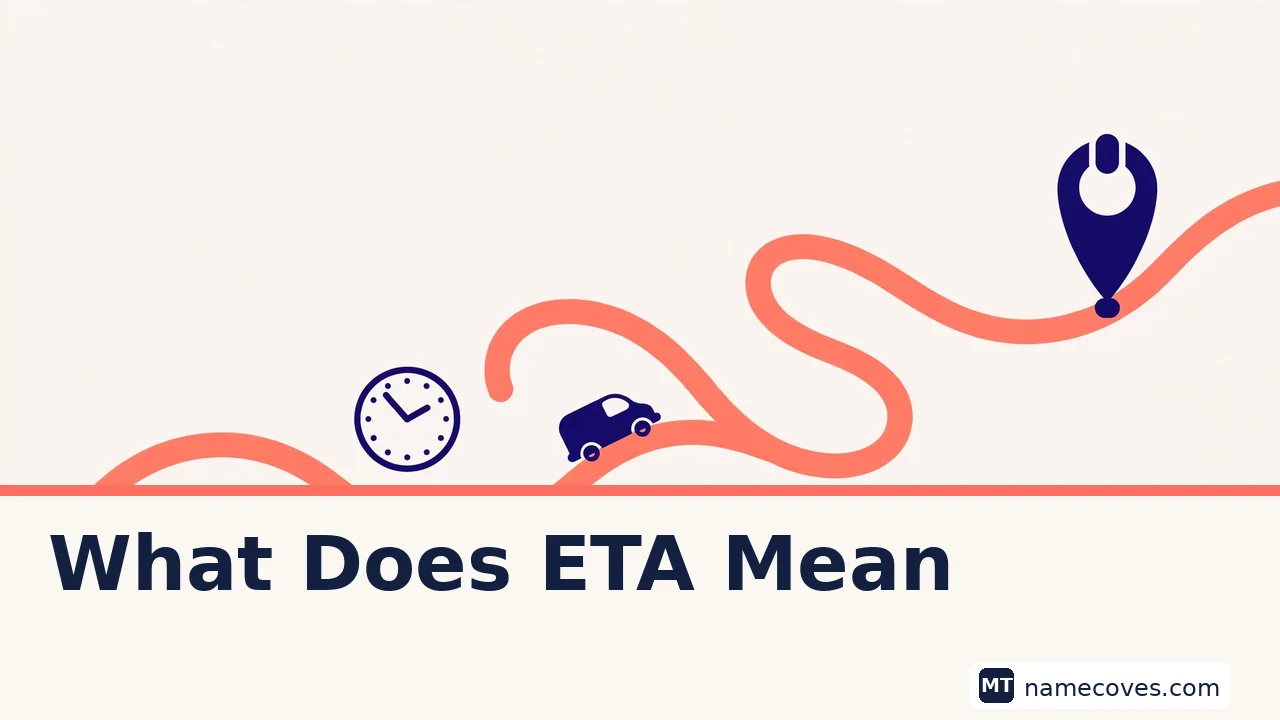
Wondering what does ETA mean? It stands for estimated time of arrival, the expected time a person, vehicle, or package will reach its destination.
Airlines, delivery services, and ride apps use an ETA to say how much longer a trip should take.
In texts, “What’s your ETA?” is a quick way of asking when someone expects to arrive.
An ETA is an estimate, not a promise, so traffic and delays can move it earlier or later.
Your phone lights up with a message from the friend who is picking you up: “ETA 10.” Ten what, exactly? If you have ever watched a food delivery map and counted down the minutes as a little car icon crawled toward your street, you have already used the idea behind this abbreviation.
ETA shows up in flight updates, shipping notices, taxi apps, and everyday group chats, which is why so many people look it up. This guide covers both sides of the term: the original travel and logistics meaning, and the casual texting use that now appears in plans between friends. It also shows how to answer when someone asks for yours, and when a plain clock time works better instead.
ETA in Travel and Logistics: Where It Comes From

ETA began as working language for people who move cargo for a living. Pilots, ship captains, and trucking dispatchers all plan around one question: when will it arrive? Writing “estimated time of arrival” in every schedule and radio call was slow, so the three-letter form became the standard across the transport world.
The same idea now powers the screens you check every day. Flight trackers update a plane’s ETA when it is delayed, parcel services give packages an ETA for the delivery day, and ride apps count down your driver’s ETA in minutes. Navigation apps work the same way: the arrival time your GPS shows is an ETA built from distance, speed limits, and live traffic.
What Does ETA Mean in Texting and Chat?
Between friends, family, and coworkers, ETA is everyday shorthand. The classic form is a question, “What’s your ETA?”, which simply means “when do you think you will get here?” It expects a short answer: a clock time or a number of minutes.
Replies are just as brief. “ETA 7:30,” “About 15 minutes out,” and “ETA 20, stuck in traffic” are all complete, normal answers. Nobody spells it out in chat, and adding a reason when you are late is good manners.
Examples of ETA in Real Messages

Person A: “Just landed. What’s your ETA to arrivals?”
Person B: “ETA 12 minutes.”
Interpretation: Person B expects to reach the arrivals area in about twelve minutes.
Person A: “Pizza is ordered, ETA 8:15.”
Person B: “Great, I will set the table.”
Interpretation: the food is expected to arrive at 8:15.
Person A: “We start at nine, where are you?”
Person B: “Sorry, traffic. New ETA 9:20.”
Interpretation: Person B updates their arrival time to 9:20.
ETA, ETD, and ATA: Three Abbreviations Worth Knowing
| Abbreviation | Full Form | What It Tells You |
|---|---|---|
| ETA | Estimated time of arrival | When something is expected to arrive |
| ETD | Estimated time of departure | When something is expected to leave |
| ATA | Actual time of arrival | When something actually arrived |
The pattern is simple: E means estimated, a prediction, while the A in ATA means actual. A is for arrival, D for departure.
When You Should Not Use ETA
ETA suits quick, informal updates, but some moments call for full words. In a formal email, a report, or an invitation, write “estimated time of arrival” the first time or simply give the time itself. Many readers outside travel and tech may not know the shorthand, and a clock time never needs explaining.
Precision is the other reason. If someone is planning around you, a real time plus a note about possible delay is kinder and clearer than three letters. A fixed timetable time is a schedule, not an estimate, so calling it an ETA is inaccurate.
Frequently Asked Questions
What does ETA mean in a text message?
In a text, ETA means estimated time of arrival. When a friend asks for your ETA, they want to know when you expect to get there. You can answer with a clock time, such as 7:45, or with minutes, such as “about 20 away,” and both replies are completely normal.
What is the difference between ETA and ETD?
ETA is the estimated time of arrival, when something is expected to get somewhere. ETD is the estimated time of departure, when something is expected to leave. A flight can carry both: an ETD of 9:00 from one airport and an ETA of 11:30 at the next, separated by the journey itself.
Is ETA only used for people?
No, it is used for almost anything that travels. Airlines publish ETAs for flights, courier companies give parcels an ETA for the delivery day, and ship and train operators plan around them. It always means the same thing: the expected moment of arrival.
What to Remember About ETA
ETA is a small abbreviation that answers a question everyone asks: when will it get here. From an airline, a delivery app, or a friend running late, it always means estimated time of arrival, the best current answer for when a person, vehicle, or package will reach its destination. Now that you know what does ETA mean, those countdowns and quick texts read clearly at a single glance.
Use ETA freely in chats, travel updates, and group plans, where a fast answer matters more than a formal one. In formal emails, reports, or messages to anyone who may not know the shorthand, write the full phrase or give a clock time instead. And keep the word estimated in mind whenever you rely on one, because an ETA is a prediction, not a guarantee, and a quick update when it changes saves everyone waiting on you a lot of needless guesswork.