API stands for Application Programming Interface. An API is a set of rules that lets two software programs talk to each other and exchange data. When an app shows you weather from another service or lets you sign in with an existing account, an API is usually doing the work behind the scenes.
You have probably met the term in ordinary places: an app description saying a feature is “powered by an API,” a settings page offering an “API key,” or a job post asking for experience with APIs. It sounds like deep technical territory, but the core idea is simple and shows up in tools you use every day.
An API is best understood as a middleman with a rulebook. One program asks for something in an agreed format, and the other program answers, without either side needing to know how the other is built inside.
What Does API Stand For?
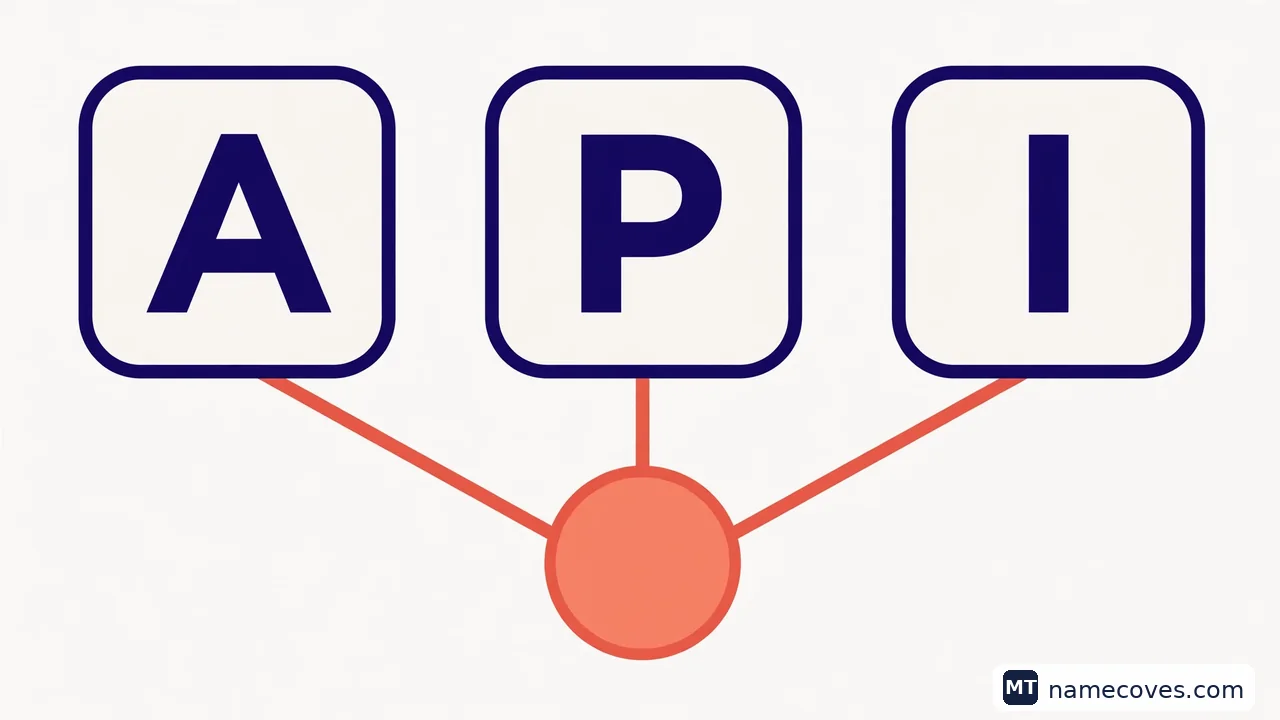
API stands for Application Programming Interface. In plain terms, an API is a defined way for software to request information or actions from another piece of software. The service offering the API publishes the rules: what you can ask for, how to ask, and what the answer will look like.
Most APIs people talk about today are web APIs, which work over the internet. A weather service, for example, can offer an API so that any app can request the forecast for a city and receive the data in a standard format, instead of every app running its own weather stations and models.
What Does Each Letter Stand For?
A: Application
An application is simply a software program: a weather app, a banking system, a social media platform. The API belongs to an application or service and exposes a small, controlled part of what it can do.
P: Programming
Programming signals that this is a tool for developers. APIs are written in code and follow technical rules, so that programs, rather than people clicking screens, can make the requests automatically and at scale.
I: Interface
An interface is a meeting point between two things. A light switch is an interface to your home’s wiring: you use it without knowing the circuits. Likewise, an API is the meeting point between two programs, defining exactly how they connect and what passes between them.
What Is an API in Simple Terms?

A common analogy compares an API to a waiter in a restaurant. You, the customer, are one program. The kitchen is the other program, holding all the ingredients and equipment. You do not walk into the kitchen and cook; you order from a menu, the waiter carries your request in, and the waiter brings back exactly what the kitchen prepared.
The API is the waiter plus the menu: it defines what can be ordered and how, takes requests in that format, and returns results in a predictable format. If a request is not on the menu, the answer is a polite error rather than chaos in the kitchen.
How Does an API Work?
Most web API exchanges follow the same pattern:
- One program sends a request, for example asking a weather service for today’s forecast in a specific city.
- The API checks the request against its rules, often including an API key that identifies who is asking.
- The service processes the request on its own systems, in its own way.
- The API returns a response, usually structured data such as JSON text, which the requesting program can read and display.
Notice what never happens: the requesting app never sees the service’s internal code or database. That separation is the point. Each side can be updated and maintained independently, as long as the agreed format stays the same.
Everyday Examples of APIs

Signing in to a new app with an existing Google or Apple account works through APIs: the app asks the account provider to confirm who you are, and receives a yes plus basic profile details, never your password. A travel site showing live flight prices from many airlines is pulling those prices through airline and booking APIs. A food delivery app that shows a live map and a courier moving along it is using a mapping service’s API. Even the weather widget on your phone home screen is almost certainly fed by a weather API.
FAQs
Do I need to know how to code to use an API?
To build with one directly, yes, APIs are developer tools. But many services wrap their APIs in no-code tools and integrations, so everyday users benefit from APIs constantly without writing code.
What is an API key?
An API key is a unique code that identifies an app or developer making requests. Services use keys to track usage, apply limits, and block misuse, a bit like a membership card for programs.
What is the difference between an API and an app?
An app is a complete program you use. An API is a connection point that lets programs work together. One app may use many APIs, and one service may offer an API used by thousands of apps.
Are APIs only on the internet?
No. Operating systems and software libraries also have APIs that programs on the same device use. The term is general; web APIs are simply the most visible kind.
What Should You Remember About API?
API stands for Application Programming Interface, and it means a rulebook plus a messenger that lets programs request data and actions from each other in a standard format. The requesting side never needs the other side’s inner workings, only the agreed format, which is why completely different apps can share maps, payments, sign-ins, and live data so smoothly.
Next time an app offers an API key or a job post mentions API experience, you will know what is really being described: not a single product, but the connective tissue that lets software cooperate. It is one of those terms that, once understood, starts appearing everywhere.