To evaluate something means to judge its value, quality, importance, or condition after looking at it carefully. When you evaluate a plan, a product, or a result, you gather the relevant facts, weigh them against some standard, and reach a conclusion. In math, evaluate has a narrower job: it means working out the numerical value of an expression.
The word turns up in very different rooms. A manager writes, “We will evaluate the proposal next week.” A teacher prints “Evaluate 3x + 2 when x = 4” at the top of a worksheet. A doctor orders tests to evaluate a patient’s heart. Same verb, and in each room it means careful judgment before a conclusion, which is exactly the thread that ties the uses together.
This is a stable, well-documented English word, so the article stays close to the dictionary: the core definition, how the meaning flexes by setting, a few natural examples, and the nearest synonyms.
What Does Evaluate Mean?
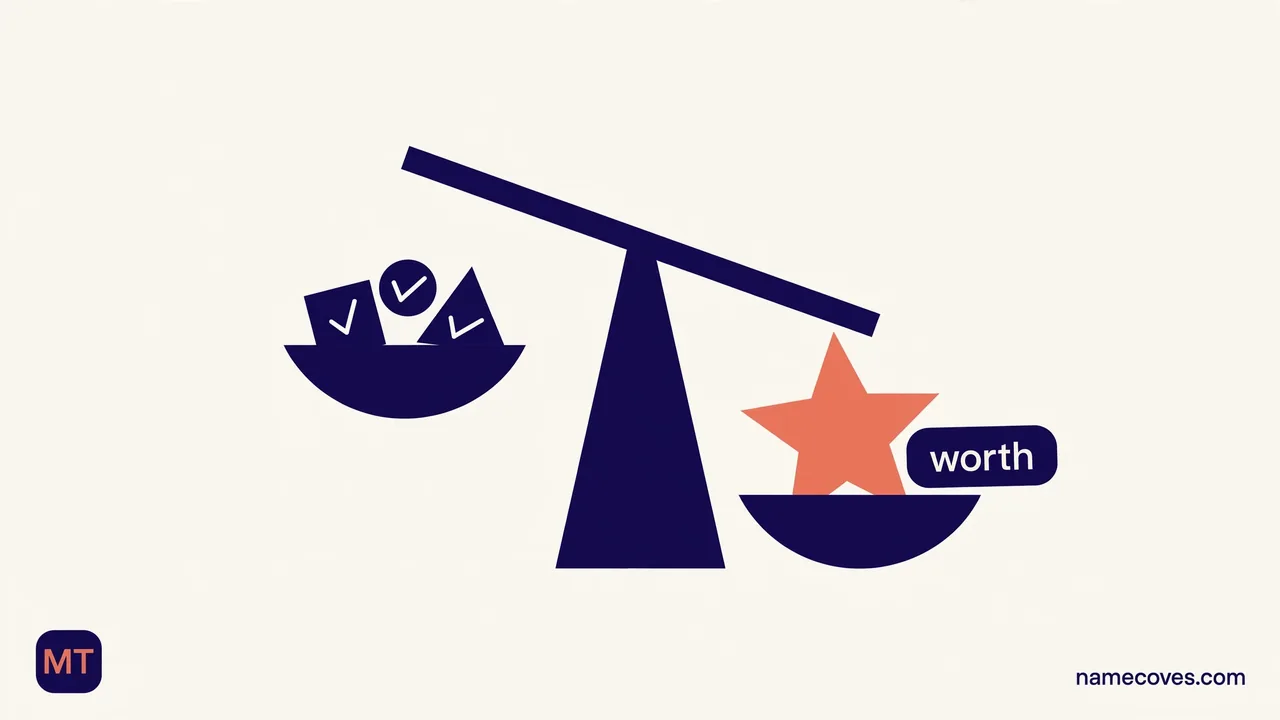
Merriam-Webster defines evaluate as “to determine the significance, worth, or condition of, usually by careful appraisal and study.” Two parts of that definition do the real work. First, evaluation ends in a judgment: a worth, a condition, a verdict. Second, it is careful: an evaluation is based on evidence and criteria, which separates it from a guess, a gut feeling, or a quick opinion.
The word comes from the French verb évaluer, built on the idea of value, and ultimately from the Latin valere, “to be worth or strong,” according to Merriam-Webster’s etymology. That root explains the word’s center of gravity: evaluating is, at bottom, about finding the value in something. The related noun is “evaluation,” and the person doing the work is an evaluator.
How the Meaning Shifts by Setting

In math
Evaluate means compute the value. “Evaluate 5² − 3” asks for a single number (22), not an opinion. Students meet this use early, which is why many people first assume evaluate always means calculate. Outside math class, it usually means judge.
At work and in school
Here evaluate means a structured review against goals or standards: a performance evaluation, evaluating a vendor’s bid, a teacher evaluating an essay. The output is typically a rating, a grade, or a decision, backed by notes on how the thing performed against each criterion.
In medicine and science
Clinicians evaluate symptoms, test results, and treatment responses: a careful assessment that leads to a diagnosis or a next step. Researchers evaluate data the same way, checking results against a hypothesis before claiming a finding. In both fields the word keeps its careful, evidence-first character.
How Is Evaluate Different from Assess and Estimate?
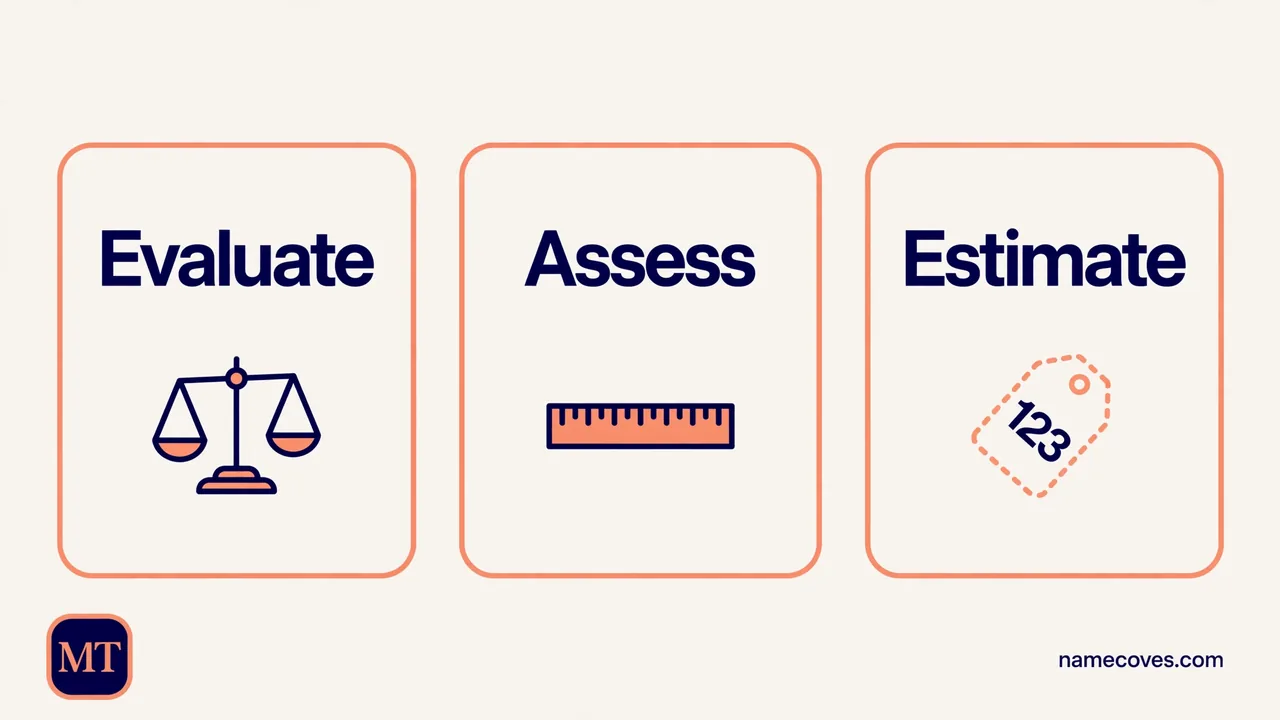
These three are close cousins and are often swapped in casual writing, but careful writers separate them:
| Word | Focus | Typical example |
|---|---|---|
| Evaluate | Judging overall worth or condition after study | Evaluate the program’s first year |
| Assess | Measuring the amount, quality, or state of one aspect | Assess the damage after the storm |
| Estimate | Roughly calculating a number before the facts are complete | Estimate the repair cost |
In practice the boundaries blur, and no one will misunderstand you for mixing them in speech. In formal reports, the distinction is a useful habit: assess gathers and measures, evaluate weighs and concludes, estimate approximates.
Examples of Evaluate in Sentences
- “The committee will evaluate each application against the published criteria.”
- “Before buying, evaluate the car’s condition, mileage, and repair history.”
- “Doctors evaluated the treatment after six weeks and found steady improvement.”
- “Evaluate the expression step by step, following the order of operations.”
- “Take a day to evaluate your options instead of deciding under pressure.”
What Are Other Ways to Say Evaluate?
Plain equivalents include assess, appraise, judge, review, examine, and weigh up. For everyday writing, “look at carefully” and “think through” often say the same thing with less formality. Evaluate itself sounds neutral and professional, which is why it dominates reports, rubrics, and official documents; in a text to a friend, “check out” or “size up” may fit the tone better.
FAQs
What is the simple meaning of evaluate?
To look at something carefully and judge its value, quality, or condition. If you evaluate a used car, you check it thoroughly and decide what it is worth and how good it is.
What does evaluate mean in math?
In math, evaluate means find the numerical value of an expression by doing the calculation, for example substituting a number for a variable and simplifying.
Is evaluate the same as assess?
They overlap. Assess leans toward measuring a state or amount, while evaluate leans toward reaching an overall judgment of worth or quality after study.
What is the noun form of evaluate?
Evaluation. A performance evaluation is the written judgment produced by evaluating someone’s work.
What Should You Remember About Evaluate?
Evaluate means careful judgment: gather the evidence, weigh it against a standard, and conclude something about value, quality, or condition. It is more deliberate than a guess and more conclusive than a quick look. The one special case is math, where evaluate simply means work out the number.
When you use the word, naming your criteria makes it stronger. “We evaluated the bids on price, warranty, and delivery time” tells a reader exactly how the judgment was earned, and that is the spirit the word has carried since its value-based roots.