There is a particular music to Russian last names. Say them out loud, Volkov, Morozova, Sokolov, and you can almost feel snow crunching underfoot and see onion domes against a steel gray sky. Russian surnames carry centuries of history inside their endings: the trades of long ago ancestors, the animals of the northern forests, the hush of winter itself.
If you landed here, you are probably looking for more than a plain list. Maybe you are naming a character in a novel and want her surname to feel authentic. Maybe you are choosing a pen name, tracing your own family roots, or you simply love the way these names sound rolling off the tongue. Whatever brought you here, you will find real meanings, honest origins, and practical guidance on what each name carries with it.
Quick answer: Russian last names are family names that most often end in -ov, -ev, -in, or -sky for men and -ova, -eva, -ina, or -skaya for women. Most are patronymic, meaning “son of” or “descendant of” (Ivanov means “son of Ivan”), or they come from occupations, animals, and nature words (Kuznetsov means “blacksmith’s son” and Volkov means “wolf”). Russian surnames change form by gender, which is one of their most distinctive features.
How Russian Last Names Work
Before you pick a name, it helps to understand the elegant logic underneath it. Most Russian surnames grew out of a simple question: whose are you? The answer became the family name, passed down through generations.
The endings -ov and -ev are possessive. Petrov literally means “Peter’s,” as in “of Peter” or “Peter’s son.” The ending -in works the same way and often follows nicknames or softer sounds. The ending -sky (sometimes spelled -ski) originally pointed to a place and later became associated with the nobility, which is why it still sounds aristocratic to Russian ears.
Here is the part many non-Russian speakers miss: surnames change with gender. A man named Ivanov has a sister named Ivanova, a wife named Smirnova, a daughter named Sokolova. If you are naming a female character, always use the feminine form. Getting this right is the single fastest way to make a Russian name feel authentic.
One more distinction worth knowing: -ovich and -ovna are patronymic middle names, not surnames. Ivan Ivanovich means “Ivan, son of Ivan.” You would never use Ivanovich as a last name. Keep surnames and patronymics in their proper places and your naming will ring true.
| Ending | Masculine | Feminine | What it signals |
|---|---|---|---|
| -ov / -ev | Ivanov | Ivanova | “Son of” or “belonging to,” the most common pattern |
| -in | Putin | Putina | Possessive, often from nicknames or short roots |
| -sky | Volkonsky | Volkonskaya | Originally place based, now sounds noble |
| -ovich / -ovna | Ivanovich | Ivanovna | Middle patronymic, never a surname |
The Most Common Russian Last Names and Their Meanings
These are the surnames you would hear called out in a Moscow schoolyard or see on office doors across Russia. They are familiar, grounded, and instantly recognizable. If you want a name that feels everyday and real, start here.
| Surname | Meaning | Pronunciation |
|---|---|---|
| Ivanov / Ivanova | “Son of Ivan”; Ivan is the Russian form of John, “God is gracious” | ih-vah-NOFF |
| Smirnov / Smirnova | From “smirny,” meaning quiet, meek, or peaceful | smeer-NOFF |
| Kuznetsov / Kuznetsova | “Blacksmith’s son,” from “kuznets,” blacksmith | kooz-nyet-SOFF |
| Popov / Popova | From “pop,” an Orthodox priest | pah-POFF |
| Petrov / Petrova | “Son of Pyotr” (Peter), from Greek for “rock” | pyeh-TROFF |
| Sokolov / Sokolova | From “sokol,” falcon | sah-kah-LOFF |
| Mikhailov / Mikhailova | “Son of Mikhail” (Michael), “who is like God” | mee-hah-YLOFF |
| Fedorov / Fedorova | “Son of Fedor” (Theodore), “gift of God” | fyoh-dah-ROFF |
| Morozov / Morozova | From “moroz,” frost | mah-rah-ZOFF |
| Volkov / Volkova | From “volk,” wolf | VOHL-kuff |
| Alekseev / Alekseeva | “Son of Aleksey,” from Greek “defender” | ah-lyek-SYAY-eff |
| Pavlov / Pavlova | “Son of Pavel” (Paul), Latin for “small, humble” | PAHV-luff |
| Kozlov / Kozlova | From “kozel,” goat | kah-ZLOFF |
| Stepanov / Stepanova | “Son of Stepan” (Stephen), “crown” | styeh-pah-NOFF |
| Nikolaev / Nikolaeva | “Son of Nikolay,” “victory of the people” | nee-kah-LAH-yeff |
| Orlov / Orlova | From “oryol,” eagle | ar-LOFF |
| Andreev / Andreeva | “Son of Andrey” (Andrew), “manly” | ahn-DRYAY-eff |
| Makarov / Makarova | “Son of Makar,” from Greek “blessed” | mah-kah-ROFF |
| Zakharov / Zakharova | “Son of Zakhar,” “remembered by God” | zah-HAH-ruff |
| Bogdanov / Bogdanova | “Son of Bogdan,” a Slavic name meaning “given by God” | bahg-DAH-nuff |
A few of these deserve a closer look. Ivanov is the single most common Russian surname, the equivalent of Smith in English, and it carries a warm, everyman feeling. Smirnov has a gentle irony to it, since it comes from a word meaning quiet and meek, yet it belongs to millions of perfectly ordinary, un-mild people. Kuznetsov speaks of craft and labor, the village blacksmith elevated into a family legacy. And Morozov, “frost,” is pure Russian winter in a single word, crisp and beautiful.
Notice how many of these began as first names. That is the patronymic engine at work: Ivan becomes Ivanov, Pyotr becomes Petrov, Mikhail becomes Mikhailov. When you see a Russian surname ending in -ov, your first guess should always be “son of someone.”
Elegant and Aristocratic Russian Surnames
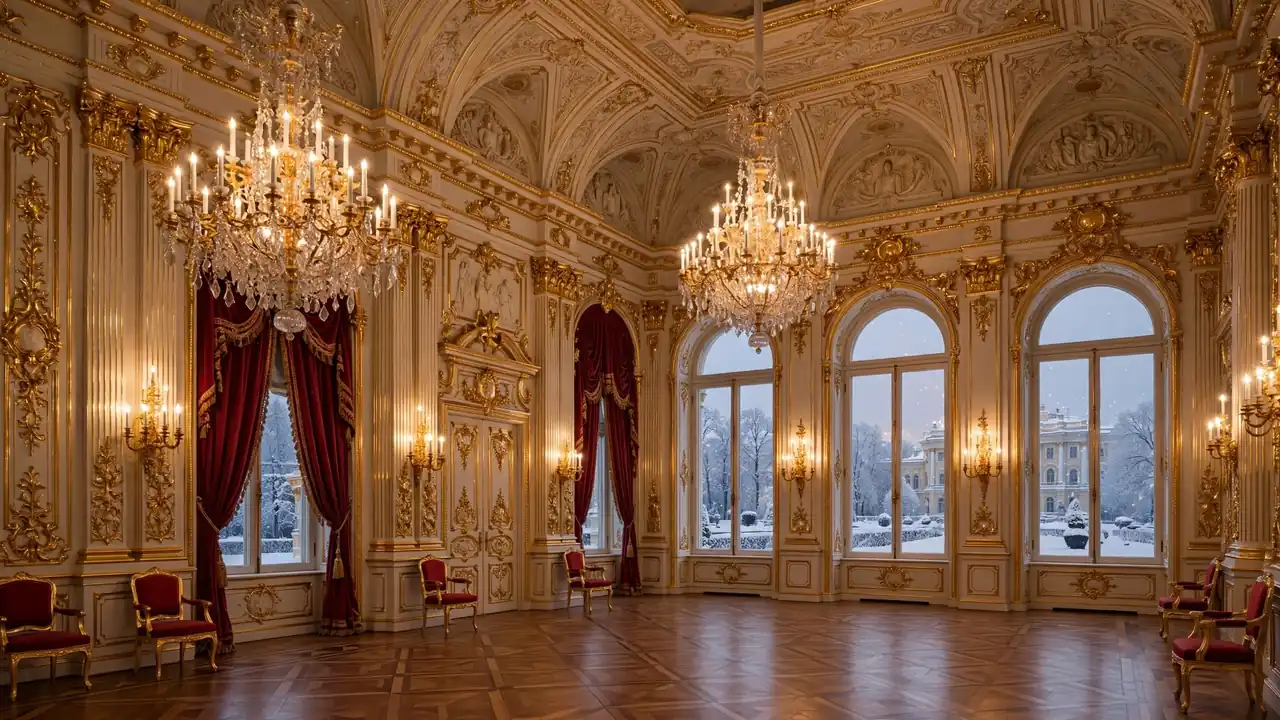
Some Russian surnames sound like candlelight and polished wood. They belong to ballrooms, winter palaces, and the pages of nineteenth century novels. Many of these were carried by real noble families, so they bring instant atmosphere, along with a touch of historical weight you should use knowingly.
- Romanov / Romanova (rah-MAH-nuff), from the Latin name Romanus, “citizen of Rome.” The imperial dynasty of Russia, so this name carries the full weight of tsars and palaces. Use it for a character only if you want that echo.
- Volkonsky / Volkonskaya (vahl-KON-skee), an old princely family name. It sounds like sleigh bells and military honor, the kind of name Tolstoy gave his most noble characters.
- Sheremetev / Sheremeteva (sheh-ryeh-MYEH-tuff), one of the great aristocratic families. Soft, flowing, unmistakably high born in tone.
- Obolensky / Obolenskaya (ah-bah-LYEN-skee), a princely name tied to the town of Obolensk. Crisp and distinguished.
- Yusupov / Yusupova (yoo-SOO-puff), a famously wealthy noble family of Tatar origin. Exotic, storied, faintly mysterious.
- Golitsyn / Golitsyna (gah-LEE-tsin), another princely house. The name feels like old money and older secrets.
- Trubetskoy / Trubetskaya (troo-byet-SKOY), princely and place derived. Strong consonants with an elegant finish.
- Sheremeteva is the feminine form worth saying aloud, it softens beautifully. In general, the feminine -skaya and -eva endings are what give aristocratic names their characteristic grace.
- Vorontsov / Vorontsova (vah-rahn-TSOFF), from “voron,” raven. Noble yet dark, perfect for a brooding character with a title.
- Naryshkin / Naryshkina (nah-RISH-kin), an old boyar family. Unusual enough to feel distinctive without sounding invented.
- Apraksin / Apraksina (ah-PRAHK-sin), historic and refined, with a rhythm that feels made for literature.
- Dashkov / Dashkova (dahsh-KOFF), from a diminutive of Daria. Shorter than most noble names, which makes it feel modern and wearable.
A note on using these: because several are real historical family names, they work best for fiction, pen names, or characters. For a real child, a grand aristocratic surname can feel like a costume. For a novel, it can be the whole atmosphere in two words.
Strong and Powerful Russian Last Names
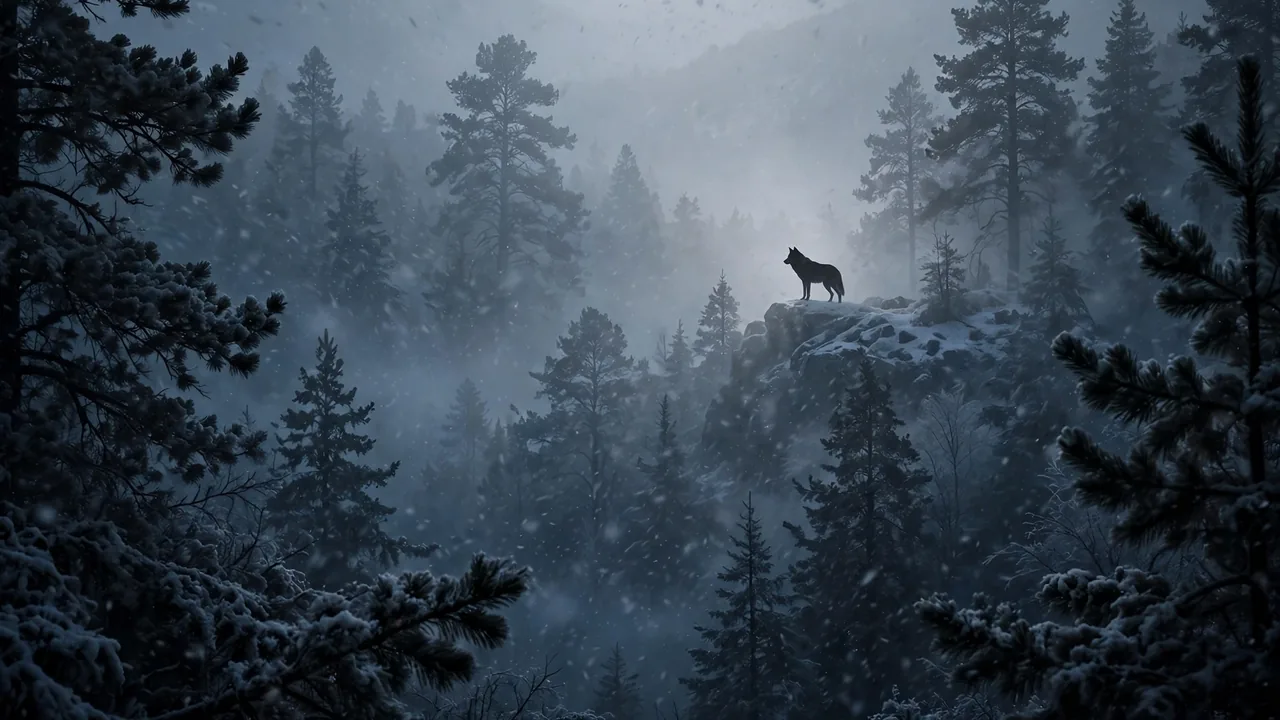
Then there are the names that sound like they could arm wrestle. Russia’s forests and winters gave its language a deep bench of fierce imagery, and the surnames built from it carry real force. These suit heroes, warriors, athletes, and anyone who wants a name with a backbone.
- Volkov / Volkova (VOHL-kuff), “wolf.” The undisputed champion of strong Russian surnames. Lean, wild, unforgettable.
- Sokolov / Sokolova (sah-kah-LOFF), “falcon.” Noble predator energy, sharp and proud.
- Gromov / Gromova (grah-MOFF), from “grom,” thunder. A name that sounds like a storm arriving.
- Orlov / Orlova (ar-LOFF), “eagle.” Majestic and far seeing, with imperial overtones.
- Medvedev / Medvedeva (myed-VYEH-duff), from “medved,” bear. Massive, grounded, impossible to push around.
- Zverev / Zvereva (ZVYEH-ryeff), from “zver,” beast or wild animal. Raw and untamed.
- Krechetov / Krechetova (kree-CHYEH-tuff), from “krechet,” gyrfalcon. Rare, aristocratic, lethal grace.
- Barsukov / Barsukova (bahr-soo-KOFF), from “barsuk,” badger. Tenacious and underestimated, a quiet kind of tough.
- Sablev / Sableva, from “sobol,” sable. Sleek, valuable, with a fur trade history woven in.
- Korshunov / Korshunova (kar-shoo-NOFF), from “korshun,” kite (the bird of prey). Circling, patient, sharp eyed.
- Tigrov / Tigrova, from “tigr,” tiger. Uncommon in real life, which makes it striking for fiction.
- Burkov / Burkova (BOOR-kuff), from “bury,” dark bay (horse color), suggesting a dark, powerful steed. Understated strength.
Animal surnames are among the oldest in Russian, and they were rarely random. A family called Volkov may well have had an ancestor known for wolfish cunning or courage. When you choose one of these, you are borrowing a little of that old reputation, so pick the animal whose qualities match your character.
Soft and Poetic Russian Last Names
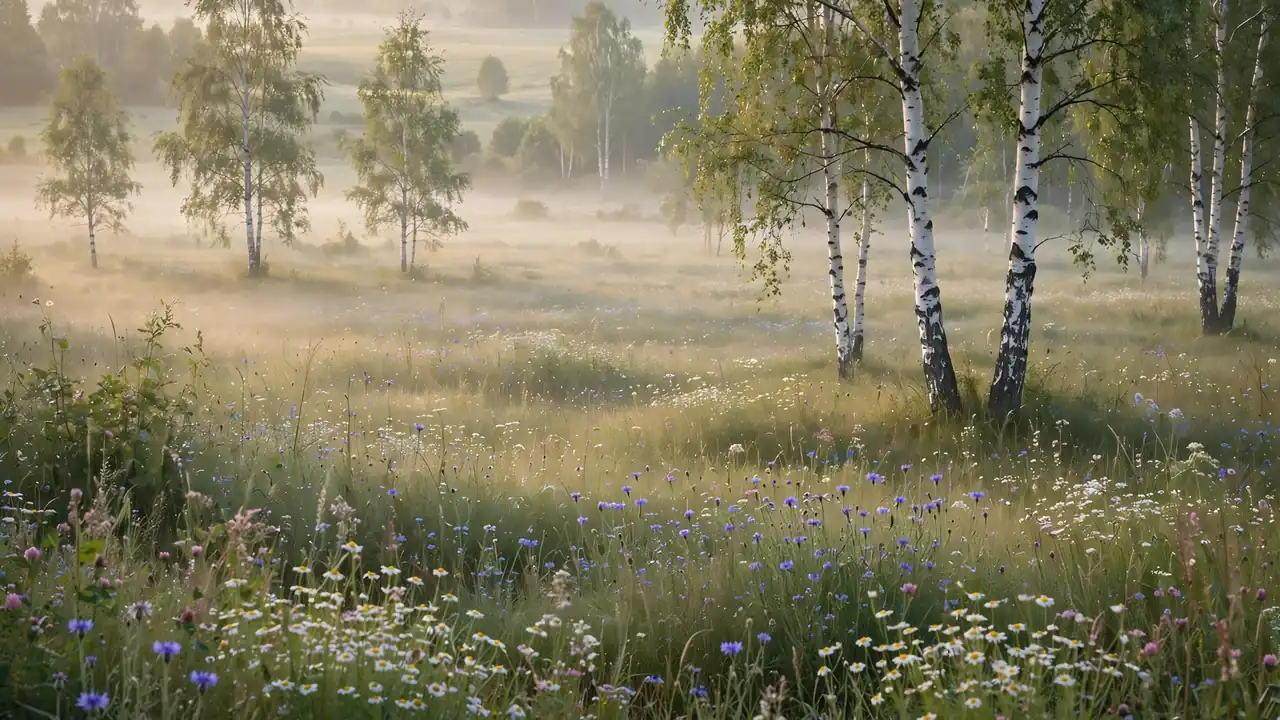
Not every Russian surname growls. Some of them sing. These are the names built from birdsong, blossoms, and pale winter light. They suit gentle characters, artists, romantics, and anyone who wants beauty without edge.
- Lebedev / Lebedeva (lyeh-byEH-duff), from “lebed,” swan. Grace on water, pure and serene.
- Solovyov / Solovyova (sah-lahv-YOFF), from “solovey,” nightingale. The poet’s surname, all music and dusk.
- Tsvetaev / Tsvetaeva (tsvyeh-TAH-yeff), from “tsvet,” blossom or color. Made luminous by the great poet Marina Tsvetaeva.
- Zaytsev / Zaytseva (ZAHY-tsuff), from “zayats,” hare. Quick, gentle, a little shy.
- Belov / Belova (byeh-LOFF), from “bely,” white. Clean as fresh snow, simple and luminous.
- Lastochkin / Lastochkina (lahs-TAHCH-kin), a diminutive of “lastochka,” swallow. Tender and small winged, a name that feels like spring.
- Romashkin / Romashkina (rah-MAHSH-kin), from “romashka,” chamomile or daisy. Meadow sweet and unpretentious.
- Golubev / Golubeva (gah-loo-BYEFF), from “golub,” dove. Peace in surname form.
- Snegirev / Snegireva (snyeh-gee-RYOFF), from “snegir,” bullfinch, the red breasted winter bird. A flash of color against snow.
- Vesnov / Vesnova, from “vesna,” spring. Hopeful, fresh, quietly optimistic.
- Lunny / Lunnaya, from “luna,” moon. Dreamy and nocturnal, lovely for fantasy writing.
- Rozev / Rozeva, from “roza,” rose. Romantic without being fragile.
These softer names pair beautifully with lyrical first names. Imagine Anastasia Lebedeva or Nikolai Solovyov, and you can hear why Russian literature is full of characters whose very names feel like verses.
Famous Russian Last Names From Literature and History
Some surnames are famous before you even learn their meanings. They belong to the writers, composers, and cosmonauts who carried them into world history, and they bring all of that resonance with them.
- Tolstoy / Tolstaya, from “tolsty,” stout. Leo Tolstoy, author of War and Peace and Anna Karenina, made this the most literary surname on earth.
- Dostoevsky / Dostoevskaya, a place derived name from the village of Dostoevo. Fyodor Dostoevsky plumbed the depths of the human soul in Crime and Punishment and The Brothers Karamazov.
- Pushkin / Pushkina, from “pushka,” cannon. Alexander Pushkin is Russia’s beloved national poet, the founder of modern Russian literature.
- Chekhov / Chekhova, Anton Chekhov, master of the short story and plays like The Cherry Orchard. Understated genius in a modest name.
- Tchaikovsky / Tchaikovskaya, from “chayka,” gull. Pyotr Ilyich Tchaikovsky composed Swan Lake and The Nutcracker, music the whole world hums.
- Gagarin / Gagarina, thought to come from “gagara,” a northern waterbird. Yuri Gagarin became the first human in space in 1961, so the name now means reaching for the stars.
- Nabokov / Nabokova, from an old word for “side” or “flank.” Vladimir Nabokov wrote Lolita and Pale Fire, and the name has never quite shaken its brilliant, unsettling aura.
- Akhmatova / Akhmatov, of Tatar origin. Anna Akhmatova’s poetry made this one of the most revered names in Russian letters.
- Pasternak, meaning “parsnip.” Boris Pasternak wrote Doctor Zhivago, and somehow the humble root vegetable became immortal.
- Rasputin / Rasputina, from “rasputye,” crossroads. Grigori Rasputin, the mystic who mesmerized the last tsar’s court, gave this name its dark, hypnotic charge.
Borrowing a famous surname for a character is a bold move. Readers will feel the association instantly, so use it deliberately. A schoolteacher named Dostoevsky invites comparison, while a minor character with the name simply adds texture.
How to Choose the Right Russian Last Name
With hundreds of beautiful options, how do you settle on one? It depends on what the name is for. Here is practical guidance for the three most common reasons people search for Russian surnames.
For Writers Naming Characters
Match the surname’s social register to the character. A peasant in 1860 would more likely be a Smirnov or Kozlov than a Volkonsky. Give women the feminine form without exception, Anna Karenina, not Anna Karenin. And say the full name aloud with the first name and patronymic, since Russian ears hear all three together. If it trips your tongue, simplify.
For Pen Names
Pick something pronounceable for your audience. English readers handle Volkov and Orlov easily but may stumble over Shcherbakov. Shorter surnames with clear stress patterns travel best. Also consider what the name whispers about genre: Morozov suits thrillers, Tsvetaeva suits poetry, Romanov suits historical saga.
For Baby Names and Family Heritage
If you are honoring real ancestry, the most meaningful choice is often the actual family name, even if it is plain. If you are adopting a Russian surname for a child, think about playground practicality in your country and if the feminine and masculine forms both work for your family. A name is a gift your child will unwrap every day.
Frequently Asked Questions
What is the most common Russian last name?
Ivanov is the most common Russian surname, followed closely by Smirnov and Kuznetsov. Ivanov alone belongs to well over a million people, making it the Russian equivalent of Smith.
Why do Russian last names change for women?
Russian is a gendered language, and surnames agree with the bearer’s gender. Masculine endings like -ov, -ev, -in, and -sky become -ova, -eva, -ina, and -skaya. So the brother is Petrov and the sister is Petrova. It is automatic and universal.
What does the ending -ov mean in Russian names?
It is a possessive ending meaning “of” or “belonging to,” most often understood as “son of.” Petrov means “Peter’s” or “son of Peter.” It is the single most common surname pattern in Russia.
What are some beautiful Russian last names for a girl character?
Tsvetaeva, Lebedeva, Solovyova, Morozova, and Belova are lovely choices, each with poetic meanings tied to blossoms, swans, nightingales, frost, and whiteness. For aristocratic elegance, consider Volkonskaya or Sheremeteva.
Can I use a Russian last name if I am not Russian?
For fictional characters and pen names, absolutely, just do it respectfully and accurately, especially the feminine forms. For a real child, it is worth thinking carefully about cultural connection and how the name will be received, but many families choose cross cultural names with love and thought.
What is a good Russian last name for a villain?
Volkov (wolf), Zverev (beast), and Vorontsov (raven) all carry delicious menace. Rasputin brings instant dark mystique because of its historical associations. For a subtler villain, try something cold and elegant like Morozov.
Final Thoughts
A Russian last name is never just a label. It is a small story about who someone was, a blacksmith, a falconer, the son of Ivan, the dweller by the frost. If you are naming a character who will live for three hundred pages, choosing a pen name that will sit on a book cover, or honoring the family that came before you, take a moment with the meaning. Say it aloud. Feel if it fits like a well cut coat or pinches at the shoulders.
The right surname does half your storytelling for you. Choose well, and every time a reader sees it, they will feel a little of the snow, the music, and the history you borrowed.