
Brown discharge is vaginal discharge that contains old blood. Blood that leaves the body slowly has time to react with oxygen, and that process turns it from red to brown, the same reason a scab darkens. According to Cleveland Clinic, brown discharge is most often a normal part of the menstrual cycle, especially at the very beginning or end of a period. Color alone cannot diagnose anything, so the details around it matter.
It tends to appear at unexpected moments: a few days before a period is due, a day or two after it seems to have ended, or as light spotting in the middle of a cycle. Because it is not the familiar red of a period, it can look more worrying than it usually is, and a quick search often makes the worry worse instead of better.
The calmer way to read it is as information. Timing, amount, how long it lasts, and any symptoms that come with it separate the everyday explanations from the ones a doctor should check. This article explains the meaning in general terms only; it cannot say what is causing yours.
What Does Brown Discharge Mean?
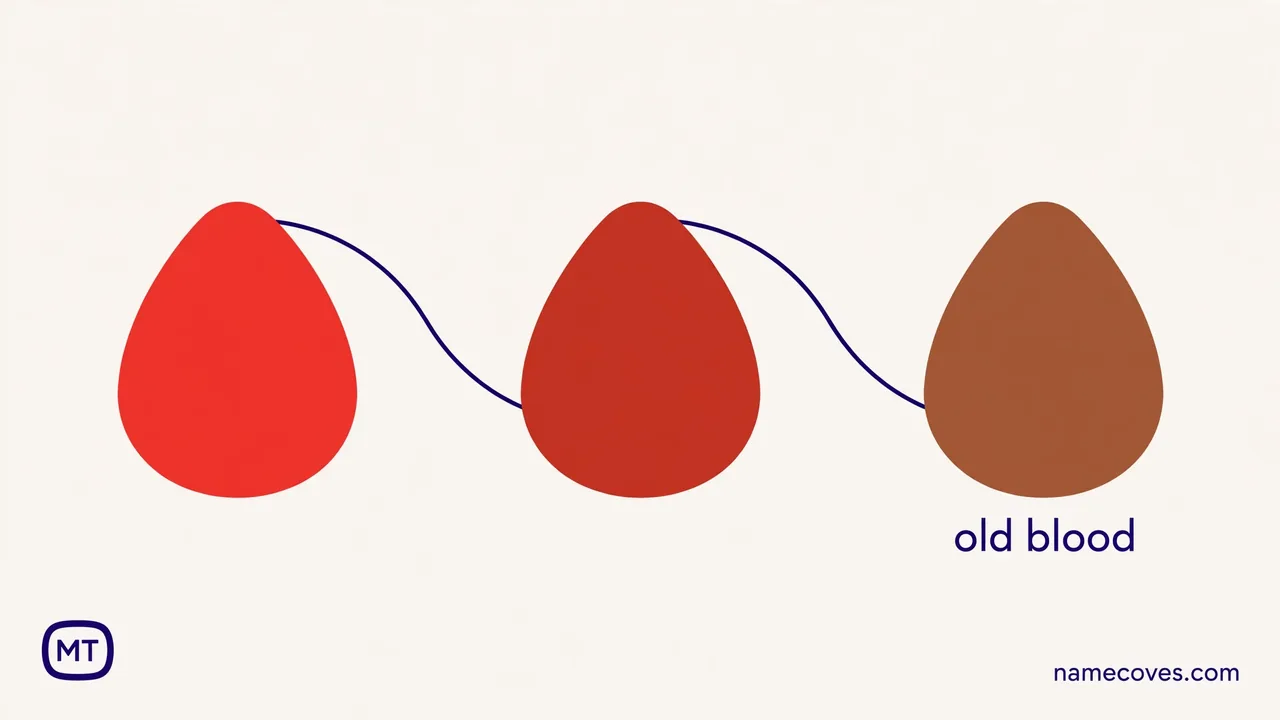
The vagina normally produces discharge that changes across the cycle, and when a small amount of blood mixes into it, the result can look pink, rusty, or brown. The brown color specifically signals older blood, blood that was shed earlier or is flowing slowly, rather than fresh bleeding, which is bright red.
That single fact explains the most common pattern. At the start of a period, flow is light, so blood takes longer to leave and arrives brown before turning red. At the end, the last of the blood does the same. Mid-cycle, tiny amounts of spotting can brown before they are even noticed. In each case, the color is about the blood’s age, not about a different substance.
Common, Usually Normal Causes
- The beginning or end of a period: the most common cause by far. Light, slow flow oxidizes and looks brown for a day or two at either end.
- Ovulation spotting: a small number of people spot lightly around ovulation, mid-cycle, and that blood often appears brown.
- Hormonal birth control: starting, stopping, or switching pills, patches, rings, or hormonal IUDs commonly causes irregular spotting in the first months, and missed pills can trigger it too.
- Perimenopause: cycles become irregular in the years before menopause, and spotting and brown discharge between periods are common in that transition.
- Early pregnancy: light spotting can occur in early pregnancy, including around implantation. Any bleeding or spotting during pregnancy should be reported to a clinician, since it also has causes that need checking.
- After sex or a pelvic exam: the cervix is sensitive and can bleed very lightly after contact, which may show up afterward as brown discharge.
Causes That Need a Doctor’s Input
Less commonly, brown discharge is a symptom of something that needs treatment or investigation, including:
- Infections, including sexually transmitted infections such as chlamydia and gonorrhea, which can cause abnormal discharge and spotting between periods
- Pelvic inflammatory disease, an infection of the reproductive organs that often adds pelvic pain and fever
- A retained object, such as a forgotten tampon, which typically causes a strong, foul odor
- Cervical or uterine polyps and fibroids, noncancerous growths that can cause irregular spotting
- Postmenopausal bleeding or spotting, which is never treated as normal and always needs evaluation, since it can occasionally be a sign of endometrial cancer
None of these can be identified from color alone. They are possibilities a clinician weighs along with your history, not conclusions to draw at home.
How Can You Tell Normal from Not Normal?

| Feature | More typical of a normal pattern | Worth getting checked |
|---|---|---|
| Timing | Right before or after a period | Frequent mid-cycle episodes with no pattern |
| Amount and duration | Light spotting, a day or two | Heavy, prolonged, or steadily increasing |
| Odor | Little or no odor | Strong or foul smell |
| Other symptoms | None | Itching, burning, pelvic pain, pain during sex, fever |
| Life stage | Regular cycles, or perimenopause | Any bleeding after menopause; any spotting while pregnant |
One clean rule sits underneath the table: new, persistent, or changing symptoms deserve an appointment, even if the likely explanation is harmless. Clinicians would rather rule out the short list of serious causes than have someone wait on them.
When Should You See a Doctor?

Book an appointment if brown discharge lasts more than a few days, keeps returning between periods, smells foul, or comes with itching, burning, pelvic pain, pain during sex, or fever. Seek care promptly if you are pregnant and notice spotting or bleeding, and always get any postmenopausal bleeding evaluated. A typical visit may include a pelvic exam, swabs for infection, a pregnancy test, and, if needed, an ultrasound. Noting when the discharge started, where you are in your cycle, and your birth control use helps the clinician narrow things down quickly.
FAQs
Is brown discharge normal before a period?
Yes, it is one of the most common patterns. Slow, light flow at the start of a period oxidizes and looks brown before the flow turns red.
How long can brown discharge last?
At the edges of a period, a day or two is typical. If it stretches beyond a few days, or happens repeatedly between periods, that is a reason to get it checked.
Can stress cause brown discharge?
Stress can shift hormone patterns and delay or change a cycle, which can produce irregular spotting. It is a possible contributing factor, not an explanation to assume if the spotting is new or persistent.
Does brown discharge mean pregnancy?
It can occur in early pregnancy, but it is far more often caused by the normal edges of a cycle or by birth control. Only a pregnancy test can answer that question.
What Should You Remember About Brown Discharge?
Brown discharge almost always means one unremarkable thing: old blood leaving the body slowly, usually at the start or end of a period. The color is chemistry, not a warning sign by itself. What turns a normal pattern into a medical question is everything around it: how long it lasts, how often it returns, and symptoms like pain, fever, or a foul odor riding along with it.
If yours fits the normal pattern, there is nothing to do but note it. If it does not, or if you are pregnant or past menopause, skip the guesswork and book the appointment. A short visit and a couple of simple tests can replace a lot of anxious searching with an actual answer.