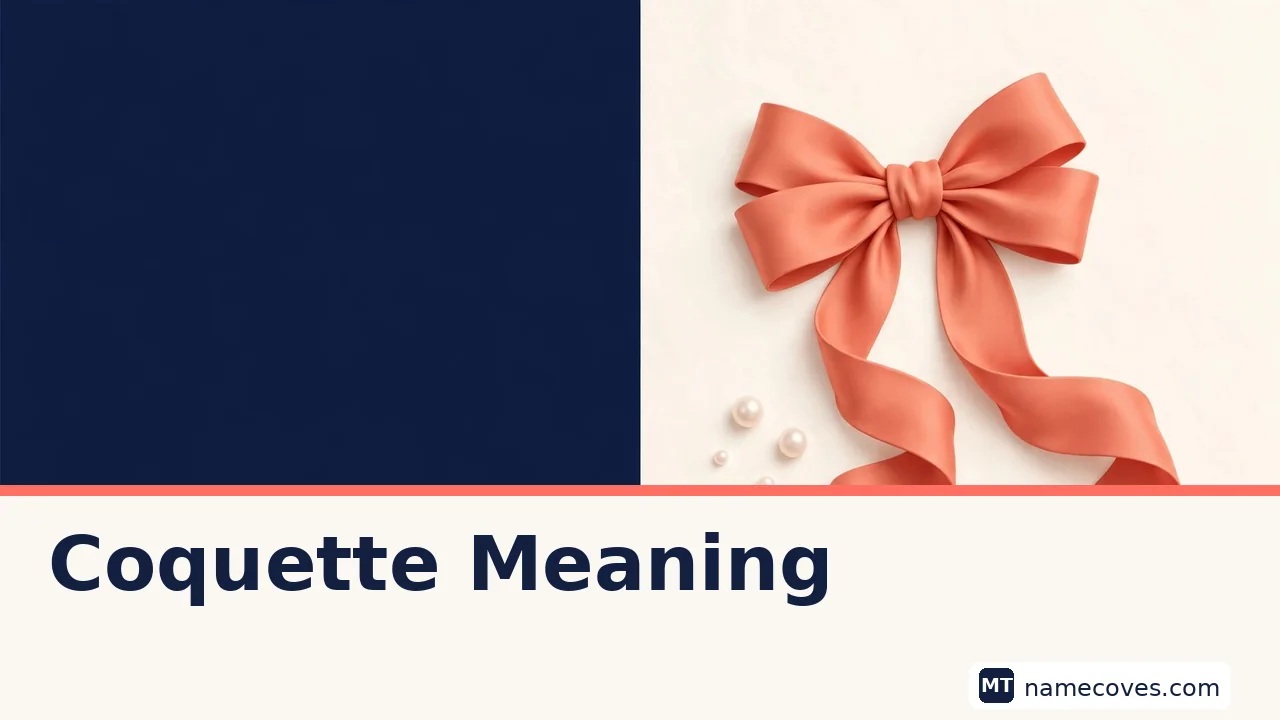
“Coquette” has two living meanings: classically, it is a noun for a woman who flirts in a playful, teasing way to gain admiration; in current fashion, it names a soft, romantic aesthetic built on bows, lace, ribbons, and ballet touches. Which meaning is in play depends entirely on context: a person’s behavior, or a style.
You can meet this word in two very different places. In a classic novel, a character is called a coquette and it says something about how she treats her admirers. On social media today, the same word captions a photo of a pink ribbon, a lace-trimmed dress, and a pair of ballet flats, and it says something about how the outfit looks.
Both uses are real, and confusing them produces odd readings in both directions. This guide separates the dictionary word from the aesthetic that borrowed its name, so you can tell which one a writer or a caption means.
What Does Coquette Mean?
As a classic noun, pronounced koh-KET, a coquette is a woman who seeks admiration and devotion from men through flirtatious behavior, without a sincere intention of returning deep affection. Merriam-Webster defines it as a woman who endeavors without sincere affection to gain the admiration and devotion of men. The emphasis falls on the performance: charm, teasing, and attention, enjoyed for their own sake.
The word can be used lightly, for someone playfully flirtatious, or with an edge of criticism, implying vanity or insincerity. It also has a verb form, “to coquet,” meaning to flirt or to trifle with someone’s feelings, though that form is now uncommon. In modern everyday writing, the noun about behavior appears mostly in books, reviews, and discussions of classic literature.
Where Did the Word Coquette Come From?
Coquette is French. Merriam-Webster traces it to the French word coquette, the feminine form of coquet, itself a diminutive of coq, the French word for a rooster. The rooster connection was about display: strutting, showing off, and courting attention. The word passed into English in the early 1600s, and for most of its life it belonged to the world of manners and courtship rather than fashion.
What Is the Coquette Aesthetic?
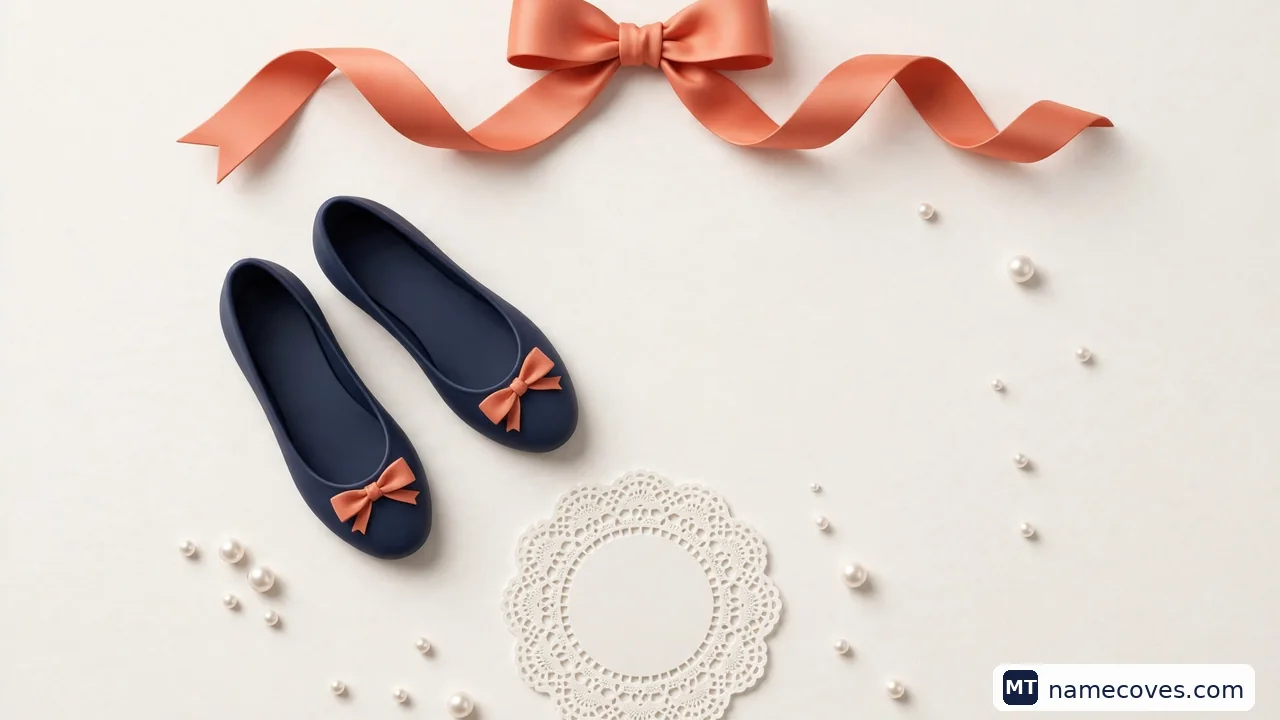
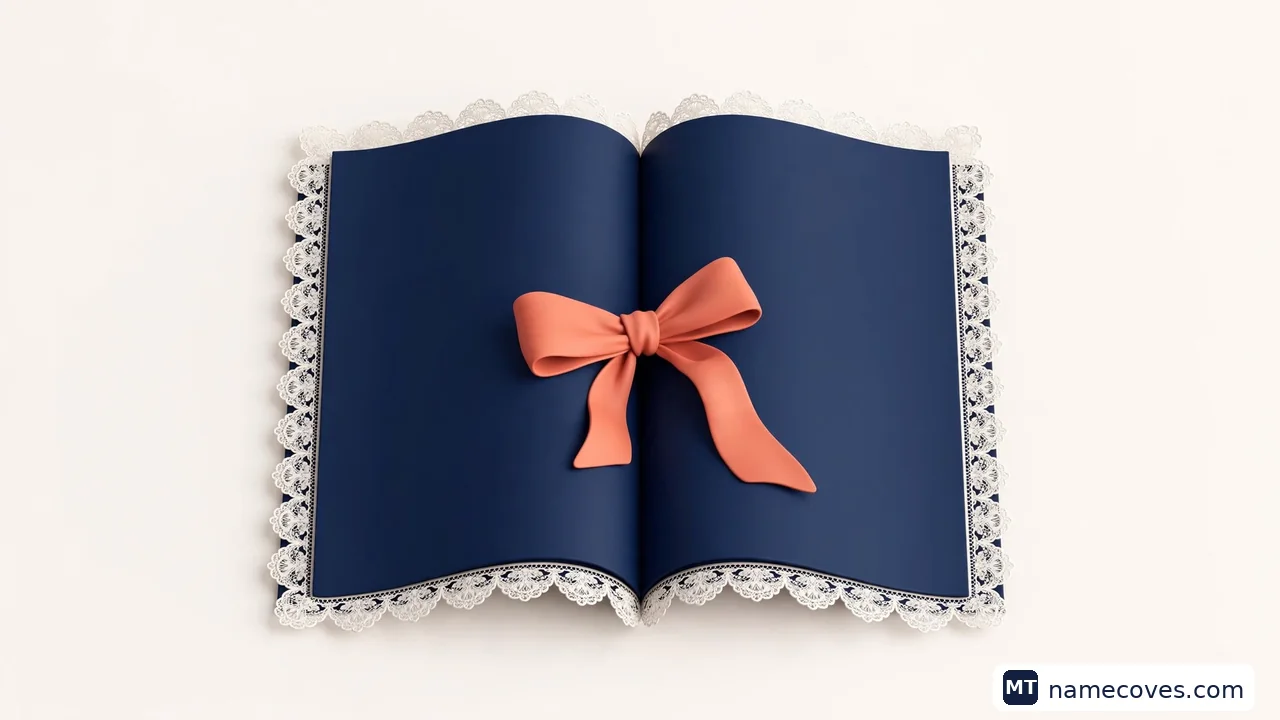
The coquette aesthetic is a fashion and beauty trend that spread on TikTok, Pinterest, and Instagram in the early 2020s. It takes its name from the word’s aura of romantic, old-fashioned femininity, but as a style label it describes objects and outfits, not anyone’s behavior. Its recurring elements include:
- Bows and ribbons, especially worn in the hair
- Lace trim, ruffles, and soft or sheer fabrics
- A pale palette built on pink, cream, and white, sometimes with touches of red
- Ballet-inspired pieces such as wrap tops, leg warmers, and ballet flats
- Pearl jewelry, vintage vanity items, and delicate, antique-looking details
When someone captions a photo “coquette,” they are almost always using this style meaning. It functions like other internet aesthetic labels: a shorthand for a mood board, not a comment on the person’s character or intentions.
How Is Coquette Different from Similar Words?
| Expression | Meaning | Typical use | Key distinction |
|---|---|---|---|
| Coquette | A woman who flirts playfully to gain admiration; also a romantic fashion aesthetic | Classic literature; fashion captions | Implies admiration is the goal; the aesthetic use is about style only |
| Flirt | A person who behaves playfully in a romantic way; also the act itself | Everyday speech, for any gender | Broader and lighter; no suggestion of insincerity is built in |
| Femme fatale | An archetype of a seductive woman who leads others into danger or ruin | Film and literature criticism | Dark and dangerous connotations; a coquette is comparatively light |
The practical takeaway: “flirt” describes behavior anyone can show, “femme fatale” adds menace, and “coquette” sits between them in the classic sense, while in fashion it has left behavior behind entirely.
Is Coquette an Insult?
It depends on the era and the tone. In older writing, calling someone a coquette could carry real criticism, suggesting she courted admiration she never meant to return. In casual modern use the behavioral sense is rare enough that it usually reads as literary or playful rather than cutting. The aesthetic use is never an insult; it is a compliment to a look. If you apply the classic word to a real person today, expect it to land as a comment on their character, so the fashion sense is the safer one to use about people you know.
Examples of Coquette in a Sentence
- “In the novel, the countess is portrayed as a charming coquette who collects admirers at every ball.” (classic behavioral sense)
- “She tied a ribbon in her hair and captioned the photo ‘coquette morning.’” (aesthetic sense)
- “He accused her of coquetting with the entire tennis club, which she found more funny than offensive.” (verb form, now rare)
FAQs
How do you pronounce coquette?
Koh-KET, with the stress on the second syllable. It rhymes with “forget” said quickly.
What is a coquette girl?
In current slang, the phrase usually refers to the aesthetic: someone whose style uses bows, lace, and soft vintage-romantic details. In older texts, it describes a playfully flirtatious woman.
Can a man be a coquette?
The word is grammatically and traditionally feminine. French had a masculine form, coquet, for a flirtatious man, but in modern English the male equivalent is almost always just “flirt.”
Is the coquette aesthetic the same as the word’s meaning?
They are connected by mood, not by definition. The aesthetic borrowed the word’s romantic, attention-loving aura and turned it into a visual style; it makes no claim about how a person behaves.
What Should You Remember About Coquette?
Coquette began as a French-derived noun for a woman who flirts to win admiration without promising anything deeper, and that is still its dictionary meaning. Its second life is visual: a soft, ribbon-and-lace aesthetic that borrows the word’s romantic atmosphere and applies it to clothes, rooms, and photos. The single most useful rule is to ask what the word is attached to. Attached to a person’s behavior, especially in a book, it is the classic meaning; attached to an outfit or a mood board, it is the style.
If you use the word yourself, the aesthetic sense is the one most readers will assume today. For the behavioral sense, “flirt” usually communicates the same idea with less risk of sounding dated or judgmental, unless you are deliberately writing in a classic register.