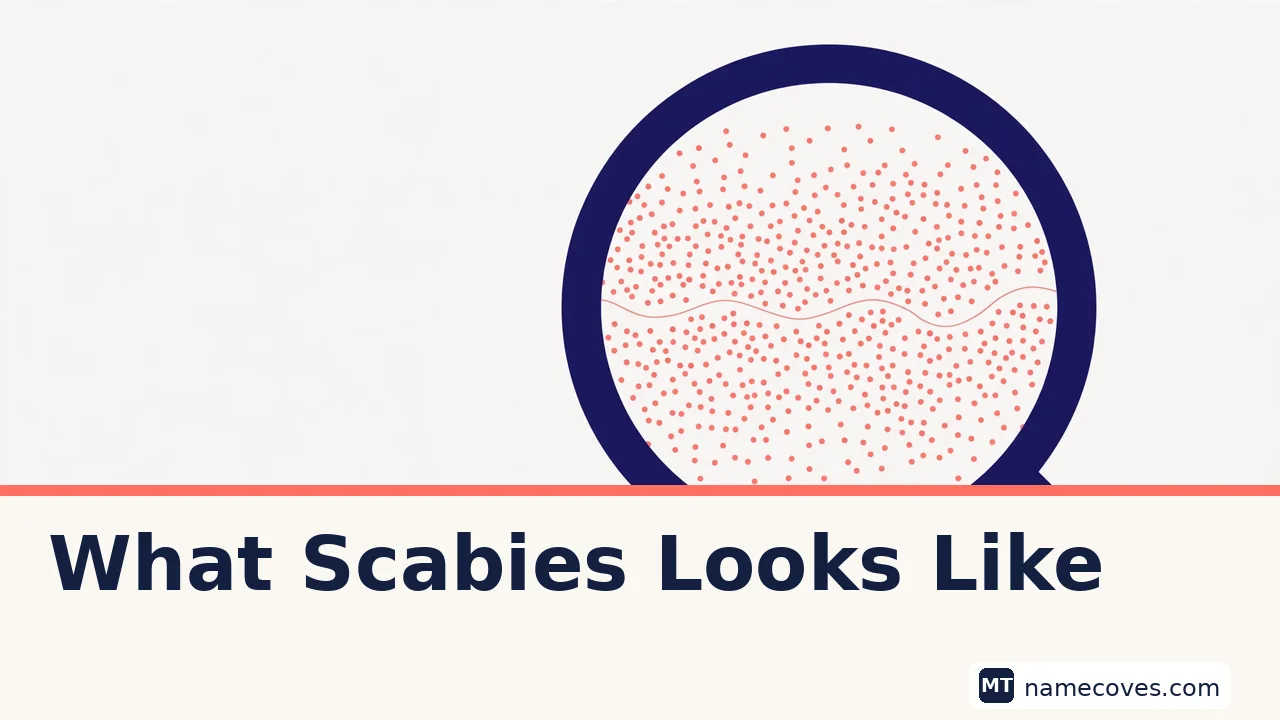
Scabies usually looks like a very itchy, pimple-like rash made of small raised bumps, sometimes with tiny blister tops or thin, wavy grayish lines called burrows. The itching is typically intense and worse at night. It most often appears between the fingers, on the wrists, and around the waistline.
The maddening part of scabies is that it rarely announces itself clearly. It starts as itching that seems out of proportion to what you can see, often at night, and the rash itself can look like half a dozen ordinary skin problems. Many people treat it as dry skin or an allergy for weeks before getting the right answer.
What sets scabies apart is the combination: where the rash shows up, how it behaves at night, and the fact that close contacts often start itching too. This guide lays out those clues, and explains why a clinician, not a photo, has the final say.
What Does Scabies Look Like?
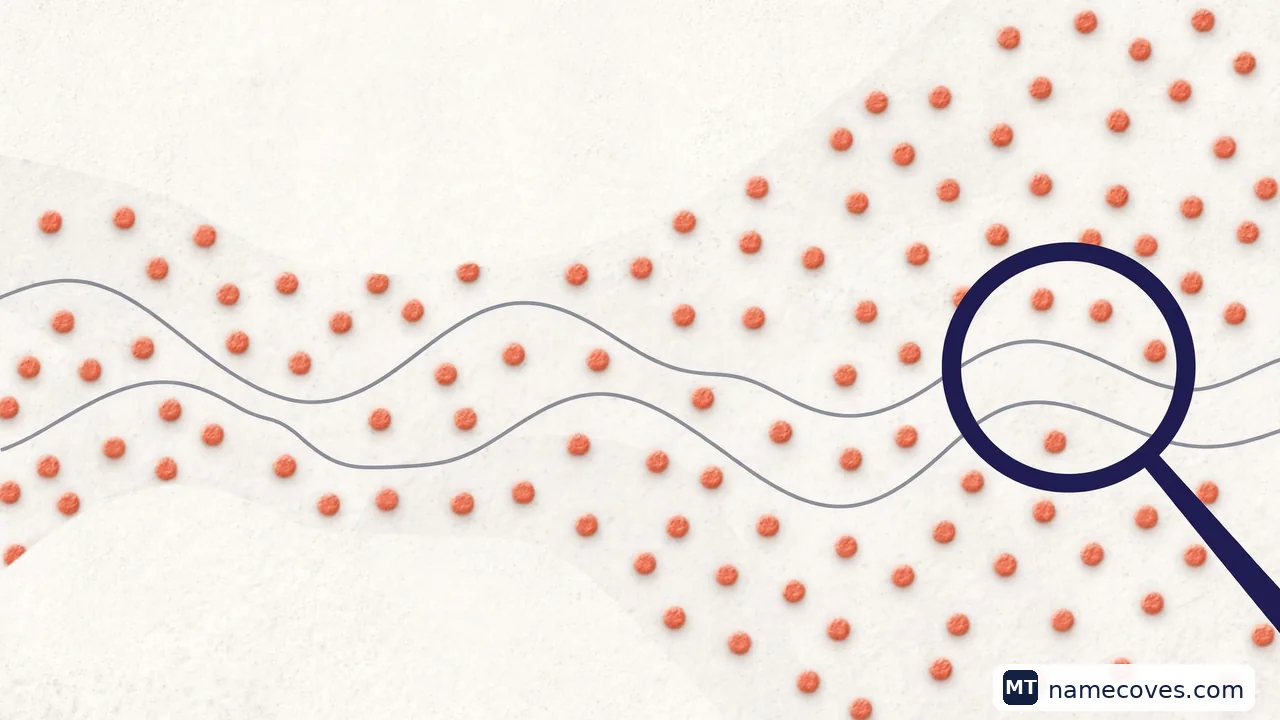
According to the Centers for Disease Control and Prevention (CDC), the most common signs of scabies are intense itching and a pimple-like skin rash. The rash is made of small pink or skin-colored bumps, and some may have tiny blister or scale-like tops. The itching is usually worst at night and can be severe enough to disturb sleep.
A more distinctive clue is the burrow: a short, thin, wavy, slightly raised grayish line on the skin. Burrows are made by the female mite tunneling just under the surface to lay eggs. They are subtle and easy to miss, and scratching often damages them, so many confirmed cases never show a clear burrow. Their absence does not rule scabies out.
Where on the Body Does Scabies Usually Appear?
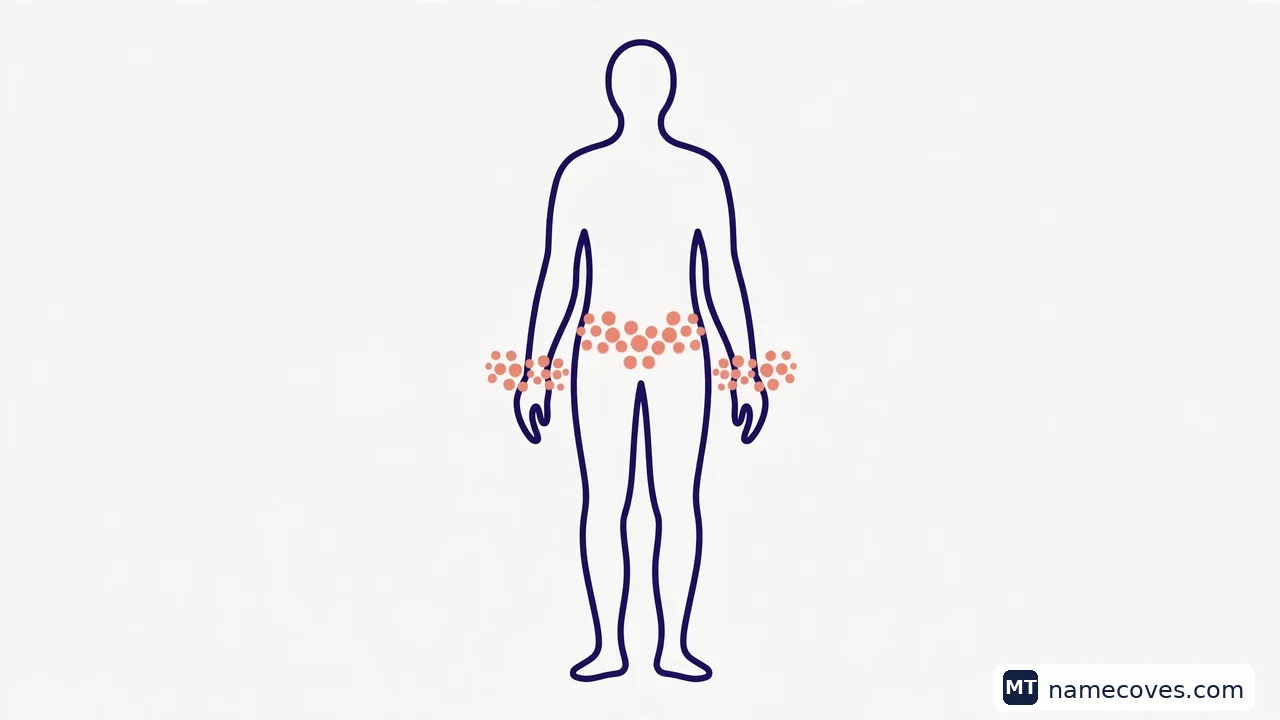
In adults and older children, the rash favors warm, folded, or covered skin. Common locations include:
- Between the fingers and on the wrists
- Around the elbows, armpits, and shoulder blades
- Along the waistline and belt line
- On the buttocks, thighs, and around the genitals
- Around the nipples in women, and under rings, watchbands, or bracelets
In babies and very young children, the pattern differs: the head, neck, face, palms, and soles are more often involved, a point the CDC specifically notes. Older adults and people with weakened immune systems can also show atypical patterns, which is one reason diagnosis in these groups is best left to a clinician.
What Causes Scabies?
Scabies is caused by a microscopic mite, Sarcoptes scabiei, that burrows into the upper layer of the skin and lays eggs. The itching and rash are largely an allergic reaction to the mites and their waste, which is why symptoms typically take four to eight weeks to appear after a first infestation, even though a person can spread it during that time.
It spreads mainly through prolonged, direct skin-to-skin contact with someone who has it, such as household members or close partners. It is not a sign of poor hygiene; anyone can get it. A much heavier form, called crusted scabies, can affect people with weakened immune systems and is highly contagious because the skin carries very large numbers of mites.
How Is Scabies Different from Eczema or Bug Bites?
This is where honest caution matters, because scabies is frequently confused with eczema, allergic rashes, and bed bug bites, and even clinicians sometimes need a close look or a skin test to be sure. Clues that raise suspicion of scabies include itching that is strikingly worse at night, bumps concentrated in the finger webs, wrists, and waistline, and household members or a partner developing a similar itch around the same time.
Bed bug bites, by contrast, usually appear on exposed skin after sleep and line up with the bedding, while eczema tends to recur in familiar patches over time. None of these clues is proof. A clinician can often confirm scabies by examining the skin closely, sometimes with a dermatoscope or a gentle skin scraping examined under a microscope.
What Should You Do If You Think You Have Scabies?

See a doctor or dermatologist rather than treating it as a generic rash. Scabies does not go away on its own, and the standard treatments are prescription mite-killing creams or lotions, sometimes combined with an oral medicine in heavier cases. Over-the-counter itch creams can soothe symptoms but will not end the infestation.
The CDC advises that close contacts, such as household members and sexual partners, are usually treated at the same time, even if they are not itching yet, to stop the mites from passing back and forth. Bedding, clothing, and towels used in the days before treatment should be washed in hot water and dried on high heat. One last expectation to set: itching can continue for two to four weeks after successful treatment as the skin reacts to dead mites, and that lingering itch alone does not mean the treatment failed.
FAQs
Can you see scabies mites with the naked eye?
Practically, no. The mites are microscopic, about the size of a pinhead at most, and they live within the skin. What you see is the rash and, sometimes, the burrow lines they leave.
How long does a scabies rash last?
Without treatment, it persists and can spread. With correct treatment, the mites are killed quickly, but the rash and itching commonly take two to four weeks to fully fade.
Is scabies contagious?
Yes, mainly through prolonged skin-to-skin contact. Brief contact is less likely to spread it, except in crusted scabies, where the mite count is so high that even casual contact and shared items can transmit it.
Can scabies come from a pet?
Pets get a different kind of mange mite. Animal mites can cause temporary itching in people but do not establish a lasting infestation, according to the CDC.
Do you need to throw away your mattress?
No. Washing bedding and clothing in hot water and drying on high heat is the standard advice. Items that cannot be washed can be sealed in a bag for at least 72 hours, since the mites do not survive long away from skin.
What Should You Remember About Scabies?
Scabies looks like an intensely itchy, pimple-like rash, often with fine burrow lines, concentrated in places like the finger webs, wrists, and waistline, and its itch is famously worse at night. It is caused by a microscopic mite, spreads through close contact, and has nothing to do with being unclean. Because it imitates other rashes so well, appearance alone cannot confirm it.
If the pattern sounds familiar, especially if someone close to you is itching too, book a clinician visit instead of cycling through home remedies. Prescription treatment, given to you and your close contacts together, is what actually ends it.