There is a particular thrill in hearing a last name you have never encountered before. It hangs in the air a moment longer than ordinary names, inviting a question: where does that come from? A rare surname turns an introduction into a story, and in a world of Smiths and Taylors, that small spark of mystery is pure gold.
Maybe you are naming a character who needs a surname with real weight behind it. Maybe you are choosing a pen name that will look striking on a book cover, tracing a branch of your own family tree, or building a creative identity that refuses to blend in. Whatever brought you here, you deserve names with documented histories, not meanings someone made up on the internet.
Quick answer: Rare last names are uncommon surnames with documented linguistic or historical roots. Examples include Nightingale, a nickname for a beautiful singing voice; Fairbairn, Older Scots for “fair child”; Throckmorton, from an English place name; and Vavasor, a medieval feudal rank. This guide collects 37 such names, each with a checked meaning and the feeling it carries.
One honest note before we begin: rarity varies by country, and the U.S. Census Bureau’s 2020 surname tables only cover names reported at least 100 times. Think of this as a discovery list of genuinely uncommon names with real stories, not a statistical ranking of the rarest surnames on earth.
Rare Last Names at a Glance
Here is the lay of the land. The 37 names fall into four families, each with its own flavor.
| Origin Group | Names Covered | What Makes Them Distinct | Standout Picks |
|---|---|---|---|
| British and Scottish | 16 | Place names, landscape words, old descriptive nicknames | Nightingale, Throckmorton, Fairbairn |
| French and Romance | 14 | Topographic names, old occupations, elegant forms | Desrosiers, Delisle, Beauregard |
| German and Dutch | 3 | Bird names and landscape compounds | Quackenbush, Nachtegall |
| Historical and spelling forms | 4 | Old titles, medieval elements, documented variants | Vavasor, Fitzroy |
Rare British and Scottish Last Names
British and Scottish surnames grew out of real life: the village you came from, the hill behind your house, what the neighbors called you. Some preserve the names of old settlements; others began as nicknames or landscape descriptions. They are perfect if you want something that sounds storied without sounding invented.
Nightingale
Meaning: A nickname for someone thought to have a good singing voice, linked to the nightingale bird. Origin: English, with a possible alternative history as an Anglicized form of the German and Ashkenazic Jewish surname Nachtigall. Pronunciation: NYE-ting-gale in American English. Vibe: Nature-inspired, literary, lyrical. Why it stands out: Its documented etymology ties a recognizable bird name to an old descriptive nickname, giving it meaning beyond its beautiful sound.
Throckmorton
Meaning: From a place name whose elements are read as “beam bridge,” “pool,” and “settlement” or “enclosure.” Origin: English, from Throckmorton in Worcestershire. Pronunciation: THROK-mor-tən, approximately. Vibe: Elaborate, historical, traditional. Why it stands out: The surname has a traceable English place-name origin, and the Throckmorton family had a documented presence in Tudor England.
Cumberbatch
Meaning: From the place name Comberbach; its elements may point to Cumbrians or Britons and a stream in a valley. Origin: English, associated with northern Cheshire. Pronunciation: KUM-ber-batch. Vibe: Highly distinctive, recognizable, old-world. Why it stands out: Its documented link to an English place name gives it a concrete history. Note that the precise reading of the place-name elements has more than one possible explanation.
Fairbairn
Meaning: “Fair child,” in the historical sense of fair, beautiful, or light in appearance. Origin: Scottish, originally a descriptive nickname in Older Scots. Pronunciation: FAIR-bairn. Vibe: Traditional, compact, distinctly Scottish. Why it stands out: The meaning comes from recognizable Scots vocabulary, a textbook example of a surname born from a descriptive expression.
Thackeray
Meaning: Connected to thatching or reeds and a nook or corner of land. Origin: English, a habitational surname tied to Thackray in Yorkshire, whose name carries Old Norse elements. Pronunciation: THAK-uh-ray. Vibe: Literary, traditional, distinctive. Why it stands out: The name preserves a link to a Yorkshire settlement later submerged beneath Fewston Reservoir, tying it to a specific lost landscape.
More Distinctive British and Scottish Surnames
The names below carry documented ties to English or Scottish places, landscape vocabulary, personal names, or descriptive terms.
| Name | Meaning | Origin | Style |
|---|---|---|---|
| Winterbottom | Probably a valley bottom where livestock overwintered | English, habitational | Earthy, unusual |
| Breckenridge | Bracken-covered ridge, or someone from a place of that name | Scottish | Rugged, traditional |
| Ashdown | Linked to a hill named for growing ash trees | English, habitational | Nature-linked, understated |
| Hawthorne | Linked to a hawthorn tree or particular English place names | English and Scottish traditions | Literary, botanical |
| Huxley | From a place name built from Old English elements for a personal name or word and a woodland clearing | English | Crisp, literary |
| Ainsworth | From a Lancashire place name joining a personal name with worth, “enclosure” | English | Traditional, geographic |
| Molyneux | One documented origin is the Old French occupational term for a miller | English and Irish, of Norman origin | Aristocratic, elaborate |
| Sturdy | Originally a nickname for someone described as bold, valiant, reckless, or rash | English, especially North Yorkshire | Strong, direct |
| Whittington | “Hwita’s settlement,” from an Old English personal name plus a word for farmstead or estate | English, habitational | Historical, stately |
| Blackwood | From place names built from Old English elements meaning “dark” and “wood” | Scottish and English | Dramatic, nature-inspired |
| Underwood | Someone who lived below a wood on a hillside, or from a place of that name | English | Familiar-sounding, grounded |
These surnames show several naming processes at work. Winterbottom and Ashdown preserve landscape associations, Ainsworth and Whittington grew from place names, and Sturdy began life as a descriptive nickname. Treat the proposed meanings as guides rather than certainties: a place-name explanation should not automatically be read as a literal description of every family carrying the name.
Rare French and Romance-Language Last Names
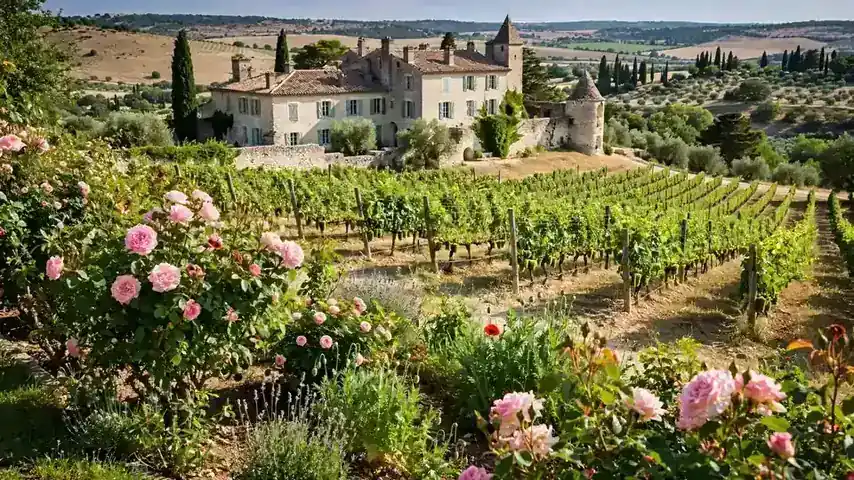
French, Spanish, and other Romance-language surnames bring a different music. Some point to landscapes or settlements, others preserve old occupations and descriptions. Their documented linguistic histories make them meaningful choices without any need for invented symbolism.
Desrosiers
Meaning: “From the rose bushes,” or a person from a place called Les Rosiers. Origin: French and Haitian surname traditions, from Old French rosier, “rose bush.” Pronunciation: Approximately də-ROH-zee-ay in some North American families; pronunciations vary. Vibe: Botanical, elegant, heritage-rich. Why it stands out: Its documented topographic explanation connects the name to rose bushes, while a separate place-name explanation accounts for other families bearing it.
Delisle
Meaning: “From the island.” Origin: French, from de and isle, the latter descending from Latin insula, “island.” Pronunciation: Approximately duh-LEEL in some English-speaking families; other family pronunciations occur. Vibe: Short, refined, distinctly French. Why it stands out: Its parts preserve a clear geographical image, though the surname can also mark someone from a French place named L’Isle or Lisle.
Beauregard
Meaning: “Fair view,” “beautiful outlook,” or “fine aspect.” Origin: French, originally tied to places named Beauregard. Pronunciation: BOH-rih-gard in common American English; the French pronunciation differs. Vibe: Grand, historical, expressive. Why it stands out: Its meaning is grounded in the French elements beau, “fair” or “lovely,” and regard, “aspect” or “outlook.”
More French and Romance-Language Surnames
These include place-derived names, occupational surnames, and one Spanish surname. Their meanings reflect documented linguistic histories, not a claim that every family shares one ancestry.
| Name | Meaning | Origin | Style |
|---|---|---|---|
| Beaumont | “Fair” or “lovely hill” | French and Norman-influenced English | Elegant, traditional |
| Rochefort | Habitational surname from places named Rochefort | French; also has an English form related to Ratchford | Historic, substantial |
| Lefèvre | Blacksmith or ironworker | French and Walloon | Occupational, traditional |
| Pomeroy | From a place name meaning “apple orchard” | English surname of Norman origin | Historic, pastoral |
| Deschamps | Linked to fields, country life, or a place named Saint-Pierre-ès-Champs | French | Rural, traditional |
| Charbonneau | Linked to coal work or, historically, a nickname for dark hair or complexion | French | Distinctive, heritage-rich |
| Fleury | From French place names built on a Gallo-Roman personal name tied to flowering or blooming | French and Norman-origin English | Botanical, refined |
| Marchand | Merchant or trader | French; tied historically to Latin trade vocabulary | Occupational, traditional |
| Villeneuve | “New settlement” or “new town” | French, habitational | Geographic, polished |
| Lavigne | “The vineyard,” or a person associated with vineyards | French | Nature-linked, elegant |
| Villalobos | From a place name joining villa, a settlement, and lobos, “wolves” | Spanish | Dramatic, distinctive |
The explanations here separate a literal word meaning from any one family’s origin. Beaumont attaches to named settlements, Deschamps has both locational and descriptive explanations, and Villalobos grows from a Spanish place name.
Rare German and Dutch Last Names
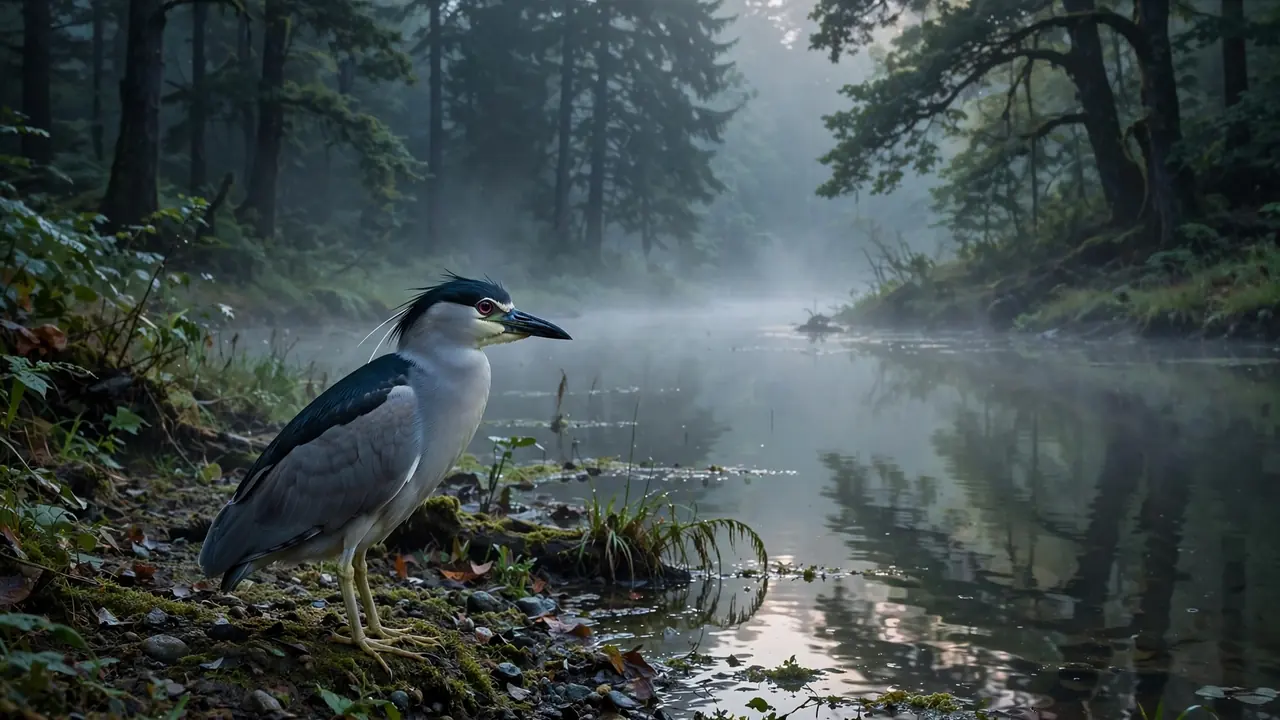
German and Dutch surnames can preserve bird names, landscape references, and old craft words. They are especially handy when you want an uncommon spelling with a documented linguistic explanation behind it.
Quackenbush
Meaning: “Night heron woodland,” joining Dutch elements for a night heron with woodland or wilderness. Origin: Americanized form of the Dutch surname Quackenbosch. Pronunciation: KWAK-ən-bush. Vibe: Memorable, unusual, earthy. Why it stands out: Its etymology pairs two concrete natural features, and the family name is documented in the history of seventeenth-century New Netherland, in the area that is now Albany, New York.
More German-Derived Surname Options
| Name | Meaning | Origin | Style |
|---|---|---|---|
| Nachtegall | “Nightingale”; a nickname possibly for a good singer, or an ornamental surname | German and Ashkenazic Jewish naming traditions | Lyrical, distinctive |
| Rosenkranz | “Wreath” or “rosary”; tied to a wreath-making occupation, a house sign, or an ornamental surname | German and Danish; also found in Jewish Ashkenazic naming traditions | Symbolic, traditional |
Nachtegall grows from a Middle High German word for “nightingale,” while Rosenkranz has several documented explanations. These are linguistic and historical connections; they should not be used to infer anyone’s present-day religion or beliefs.
Rare Historical Surnames and Distinctive Spelling Forms
Sometimes a surname stands out because it preserves an old social title, a historical name element, or an uncommon spelling. These are gold for historical fiction, genealogy projects, and anyone who wants something outside familiar modern patterns.
Vavasor
Meaning: A feudal tenant ranked immediately below a baron. Origin: Norman and English, from Old French vavassour and ultimately the Latin expression vassus vassorum. Pronunciation: Approximately VAV-uh-sor; family pronunciations may vary. Vibe: Medieval, aristocratic, historically specific. Why it stands out: Its meaning points to a documented medieval social position, making it more precise than a name chosen only for a grand sound.
Other Historical and Distinctive Forms
| Name | Meaning | Origin | Style |
|---|---|---|---|
| Fitzroy | Contains the Anglo-Norman element fitz, “son”; the exact family history varies | English, with Anglo-Norman origins | Historical, formal |
| Goodwynn | A documented spelling variant of Goodwin, from the Old English personal name Godwine | English | Traditional, distinctive spelling |
| Whitington | A documented variant of Whittington | English, associated with Sussex | Regional, historical |
A word of caution with these: Fitzroy should not automatically be read as “son of a king.” Its fitz element means “son,” and the full story depends on the particular family line. Likewise, Whitington is a documented variant spelling, not merely a similar-sounding name.
Rare Last Names by Vibe and Aesthetic
Meaning matters, but so does feeling. The same documented name can read as literary in one context and mysterious in another. Here is how the 37 names cluster by the impression they tend to make.
Literary and Lyrical
Nightingale, Thackeray, Hawthorne, Huxley, Nachtegall, Fleury. These sound like names pulled from a bookshelf: birdsong, novelists, and flowering French villages.
Grand and Aristocratic
Throckmorton, Molyneux, Beauregard, Beaumont, Vavasor, Fitzroy. Long, rolling, and formal, these carry the weight of manor houses and medieval courts.
Rooted in Nature
Nightingale, Winterbottom, Ashdown, Hawthorne, Blackwood, Underwood, Desrosiers, Lavigne, Quackenbush, Pomeroy. Valleys, woods, rose bushes, and orchards live inside these names.
Strong and Straightforward
Fairbairn, Sturdy, Marchand, Lefèvre. Compact and honest, these sound like people you can rely on.
Dark and Dramatic
Blackwood, Villalobos, Charbonneau, Cumberbatch, Rochefort. Wolves, dark woods, and fortress towns give these names a delicious edge.
Elegant and Refined
Delisle, Beaumont, Villeneuve, Deschamps, Ainsworth, Beauregard. Polished and graceful, equally at home in a novel or a family tree.
How to Choose the Right Rare Last Name
Before you commit, hold each candidate up against the job you need it to do.
Do you want a real historical connection? Throckmorton, Thackeray, and Vavasor carry documented ties to historical places or naming customs, which gives your choice something solid to stand on.
Does meaning matter most? Fairbairn, Delisle, and Beauregard have relatively transparent explanations, while Cumberbatch comes with an etymology that has more than one interpretation.
Do you need an easy pronunciation? Nightingale and Fairbairn are manageable for most American English speakers. Delisle, Desrosiers, and Vavasor may need a quick clarification the first time.
Is cultural background important? Match the surname to its documented language or historical setting instead of assuming an unusual spelling signals a particular ethnicity.
Are you researching your own family? Treat a surname’s etymology as a starting point, never as proof of ancestry. Only genealogical records can connect a modern family to a historical surname line.
8 Rare Last Names Worth Shortlisting
If the full list feels overwhelming, start here. These eight combine documented meaning, recognizable linguistic roots, and distinctive spelling. They are editorial recommendations, not a ranking of statistical rarity.
| Name | Why It Makes the Shortlist |
|---|---|
| Nightingale | Has a documented bird-related history and a link to a descriptive nickname for a singer. |
| Throckmorton | Connects to a specific English place name and a documented historical family. |
| Cumberbatch | Has a traceable Cheshire place-name origin and a particularly distinctive spelling. |
| Fairbairn | Preserves an Old Scots expression meaning “fair child.” |
| Thackeray | Has a documented Yorkshire place-name connection and a literary association. |
| Desrosiers | Offers a botanical connection to rose bushes through Old French. |
| Delisle | Has a compact spelling and a clear island-related topographic meaning. |
| Vavasor | Carries a precise historical connection to medieval feudal society. |
For a name with a direct descriptive meaning, consider Fairbairn or Delisle. For one with more elaborate historical associations, Throckmorton or Vavasor may be the better starting point.
FAQs About Rare Last Names
What are some rare last names with interesting meanings?
Nightingale is tied to a bird and an old nickname for a singer, Fairbairn means “fair child” in Older Scots, and Vavasor preserves the name of a medieval feudal rank.
How can I find out if a last name is rare in the United States?
Check the U.S. Census Bureau’s surname frequency data. Its 2020 dataset includes surnames reported at least 100 times; names below that threshold are not comprehensively ranked in the published tables.
What is the difference between a rare surname and an unusual surname?
A rare surname has low frequency in a given population, while an unusual surname may simply have an unfamiliar spelling, sound, or origin. A distinctive-looking name is not necessarily statistically rare.
Do rare last names have special meanings?
Some preserve meanings from occupations, personal descriptions, or place names, but not every surname has a single agreed-upon translation. Specialist surname dictionaries help separate documented origins from speculative guesses.
Can a surname reveal someone’s ancestry?
A surname can hint at language, geography, or historical naming customs, but it cannot establish anyone’s ancestry on its own. Family records and genealogical research are needed to document a particular family line.
Final Thoughts
A rare last name is a small inheritance of language and history. Be it Nightingale or Vavasor, Fairbairn or Fleury, you carry a fragment of a landscape, a trade, a bird, or a medieval court every time you sign your name.
Choose the one that feels right for your purpose, say it out loud a few times, and check its documented story against a reliable surname reference. The best rare names do not just sound distinctive. They give you something true to say when someone asks where they came from.