OEM stands for Original Equipment Manufacturer. It describes a company that makes parts or components used in another company’s finished product. By extension, “OEM” also labels those genuine parts themselves, such as an OEM car part or an OEM copy of software, and it is the opposite of an aftermarket replacement.
You usually meet this abbreviation while shopping, not in conversation. A replacement screen, a car part, or a copy of Windows is listed as “OEM” and priced lower than the boxed retail version, and the natural worry follows: is it genuine, or is it a knockoff with a fancy label?
The answer is better than the suspicion. OEM generally signals the real thing, made by the original maker, sold through a different channel and often with plainer packaging. Where the term gets slippery is that it points at both the manufacturer and the part, so the sections below separate the company, the parts, and the software uses.
What Does OEM Mean?
An Original Equipment Manufacturer is a company whose products are used as components in another company’s product. To take a common example, a firm that makes the sensor inside a well-known camera is an OEM for that camera brand. The camera company designs and sells the finished camera; the OEM supplies a part built to the camera company’s specifications.
Over time, shoppers began using OEM as a label for the parts themselves. When a listing says “OEM part,” it means the replacement was made by the same manufacturer that produced the original part in your product, rather than by an unrelated third party. That is why OEM sits at the center of repair and upgrade decisions: it is the closest thing to what your product was built with.
What Does Each Letter Stand For?
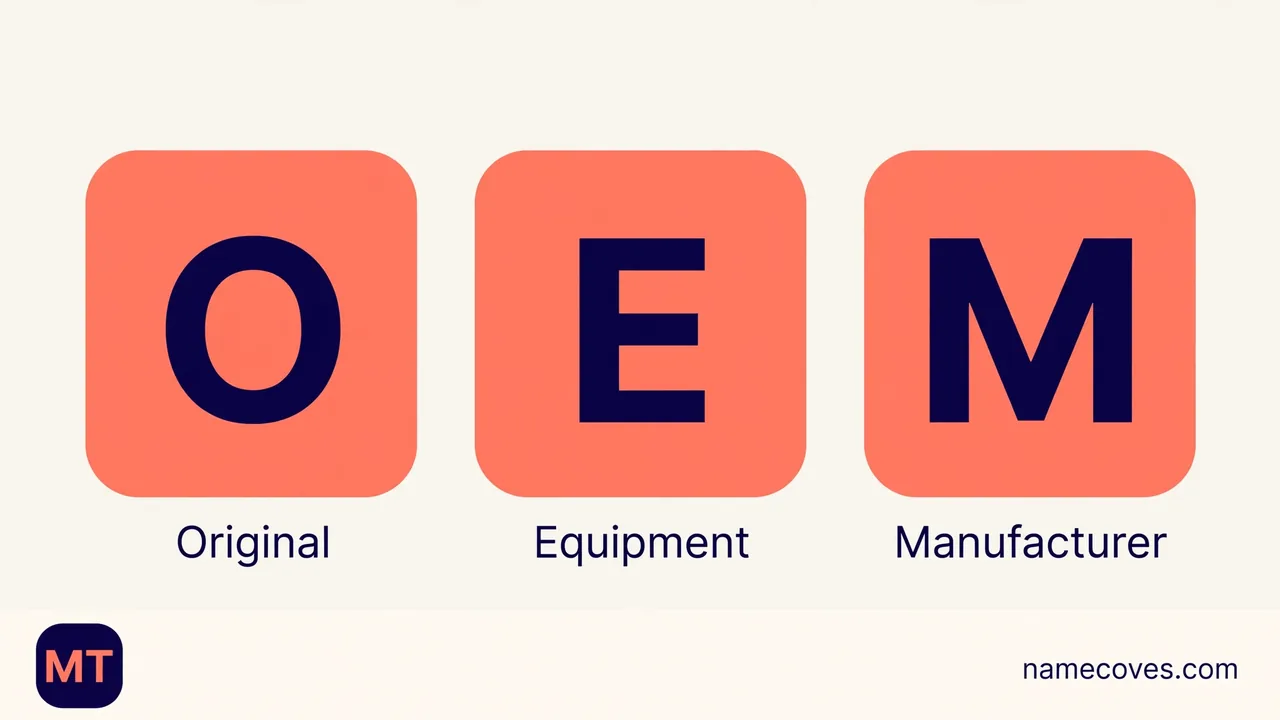
- O: Original. The part or company traces back to the source of the original product, not a copyist.
- E: Equipment. The output is hardware or components: parts, pieces, and devices rather than services.
- M: Manufacturer. The company actually fabricates the item, even when another brand’s name ends up on the box.
OEM is an initialism here, pronounced letter by letter: O-E-M.
OEM Parts vs. Aftermarket Parts
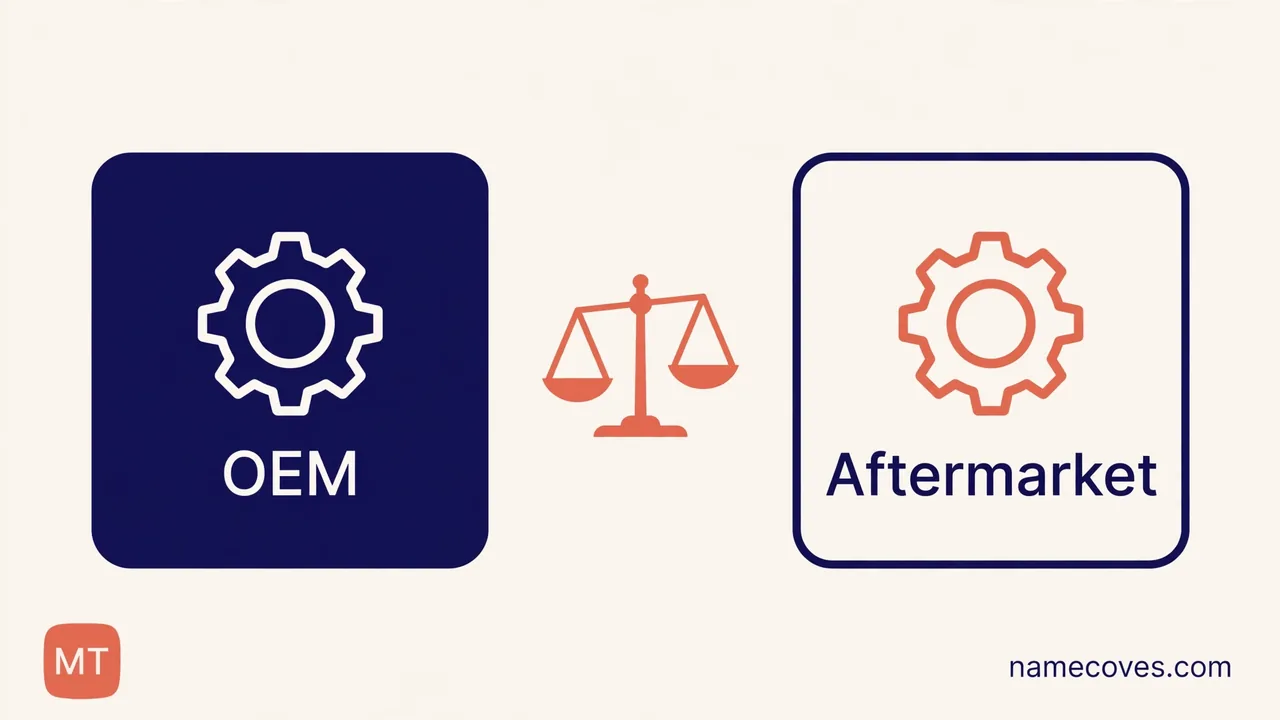
The comparison shoppers actually need is OEM against aftermarket. Aftermarket parts are made by companies other than the original manufacturer, designed to fit and function in place of the original part.
| OEM part | Aftermarket part | |
|---|---|---|
| Made by | The original manufacturer of the part | A third-party company |
| Fit and specs | Built to the original specifications | Designed to match, with more variation between brands |
| Price | Usually higher | Usually lower, with a wide quality range |
| Branding | May carry the maker’s name rather than the product brand’s | Sold under the third party’s own brand |
| Best for | Exact replacement, warranty-sensitive repairs | Budget repairs, older products, performance upgrades |
Neither column is simply “better.” A reputable aftermarket brand can be excellent value, and calling a part OEM does not guarantee it is new; listings also sell used or refurbished OEM parts. The label tells you who made it, and the seller’s description should tell you its condition.
What Does OEM Mean in Software?
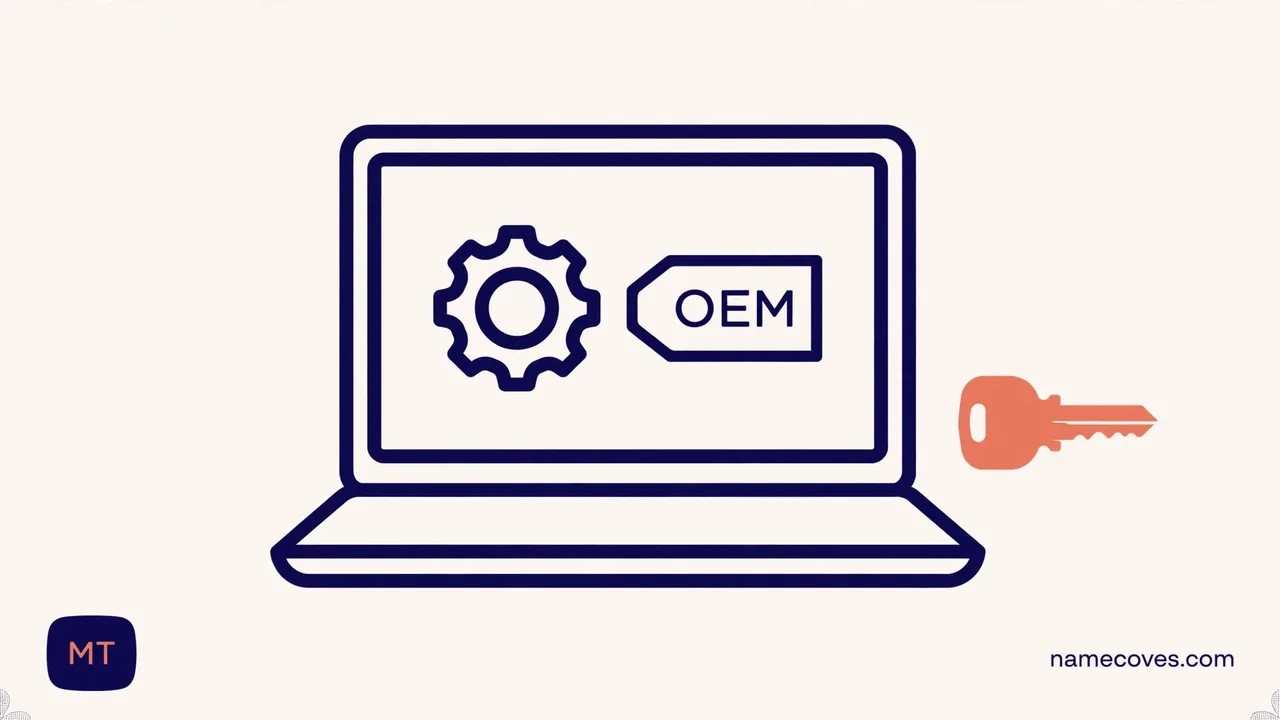
In software, an OEM version is a copy licensed for installation on a specific new computer, typically by the company building or selling that computer. When a new laptop arrives with Windows already installed, that copy is usually an OEM license. OEM software has historically been cheaper than the retail boxed version, with two trade-offs: support comes from the computer maker rather than the software company, and the license is tied to that machine instead of being transferable to your next one.
You will also see OEM used for phones, appliances, and tools, anywhere a product ships with components or software installed by its maker. In every case the core idea holds: original source, supplied for use inside someone else’s finished product.
Examples of OEM in Use
Person A: “The repair shop quoted me two prices for the alternator.”
Person B: “The higher one is probably the OEM part. It is the same maker as the original.”
Interpretation: OEM identifies the part’s maker, and explains the price gap.
Person A: “Why is this copy of Windows cheaper than the one in the store?”
Person B: “That is an OEM license. It is meant to stay with one computer.”
Interpretation: in software, OEM describes a machine-tied license, not a lesser product.
FAQs
Is OEM the same as genuine?
Essentially yes, for parts. An OEM part comes from the original manufacturer of that component, so it is genuine, though it may not carry the product brand’s logo or box.
Is OEM better than aftermarket?
OEM guarantees the original specifications and fit. Aftermarket quality varies by brand, and good aftermarket parts can match OEM performance for less money. The choice is usually about budget, warranty, and how exact the replacement must be.
What does OEM mean for phones and laptops?
It describes original components, such as screens and batteries made by the original supplier, and preinstalled software licensed to that device.
Can anyone buy OEM products?
Often yes. OEM parts and software are sold through parts dealers and electronics retailers, though some OEM software licenses are written for system builders, so check the license terms before buying.
What Should You Remember About OEM?
OEM, Original Equipment Manufacturer, names the company that made a component for another brand’s product, and by extension the genuine parts and machine-tied software that come from that source. When a listing says OEM, read it as “made by the original maker,” which is a statement about origin, not about condition or quality grade.
The practical habit is to ask two follow-up questions before buying: is this part new, refurbished, or used, and who handles the warranty? Those answers, more than the OEM label itself, tell you what you are actually paying for.