Overstimulated means your senses are receiving more input, such as noise, light, crowds, touch, or activity, than you can comfortably process at that moment. The result is a stressed, irritable, or shut-down feeling and a strong urge to escape the input. It can happen to adults, children, and babies, and it usually eases once the input drops.
The word shows up in two places that can seem unrelated. A friend leaves a loud birthday dinner early and texts, “Sorry, I got overstimulated.” Across town, a parent rocks a crying baby and says the same word about a busy family gathering.
Both people are describing the same basic experience from the inside: too much input, arriving too fast, with no pause to recover. The difference is only in who is feeling it and what counts as “too much,” which varies a lot from person to person and even from day to day. Understanding that range is what makes the word useful instead of vague.
What Does Overstimulated Mean?
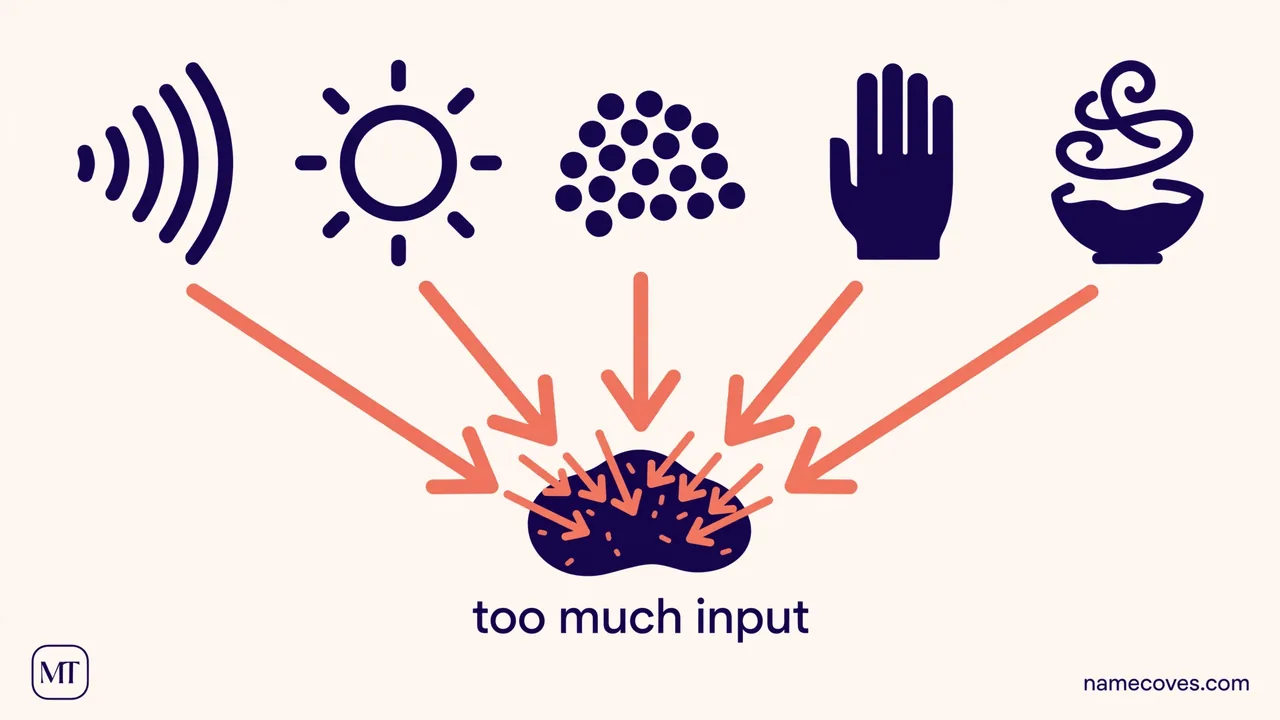
At its core, to be overstimulated is to receive more sensory input than your brain can comfortably organize and respond to. Merriam-Webster defines the related verb “overstimulate” as “to stimulate excessively,” and in everyday use the stimulation in question is almost always sensory: sound, light, movement, touch, smell, and the general busyness of people around you.
Two points in that definition matter. First, overstimulation is about the amount and pace of input, not about weakness or patience. A quiet room can overstimulate a tired newborn, and a stadium can overstimulate a rested adult. Second, it is temporary and situational. It describes a state you move into and out of, not a diagnosis or a personality trait, although people with sensory processing differences, ADHD, or autism may reach that state faster and more often.
What Does Overstimulation Feel Like?
Adults and older children usually describe a recognizable cluster of reactions. Common signs include:
- Irritability or a short fuse over small things, like a repeated question or a background TV
- Trouble following conversation or finishing a thought
- A physical urge to leave, cover your ears, close your eyes, or find a quiet corner
- Restlessness, tension, headache, or a feeling of pressure building
- Going quiet or “shutting down” instead of reacting
- Feeling exhausted afterward, even though nothing physically demanding happened
Not everyone shows every sign. Some people get louder and more frantic when overstimulated, while others go silent. The shared thread is that the reaction is driven by input level, and it improves when the input is reduced.
Overstimulation in Babies and Young Children
For babies, the word has a more specific, widely documented use. Pediatric guidance, including the American Academy of Pediatrics’ parent resource HealthyChildren.org, describes babies as overstimulated when sights, sounds, and handling exceed what their developing nervous systems can handle. Commonly listed signs include turning the head away, fussing or crying that escalates in a busy setting, hiccups, yawning, arching, and splayed fingers.
The standard advice is simple: move to a calmer, dimmer space, reduce handling and noise, and let the baby reset. Older children show a version of the same pattern, often as meltdowns after long, loud, exciting days that looked like pure fun from the outside.
How Is Overstimulated Different from Overwhelmed or Stressed?
The three words overlap, and people often use them loosely, but they point at different causes:
| Word | Main cause | Typical fix | Key distinction |
|---|---|---|---|
| Overstimulated | Too much sensory input at once | Reduce noise, light, crowds, activity | The trigger is input volume and pace |
| Overwhelmed | Too many demands or responsibilities | Prioritize, delegate, break tasks down | The trigger is workload, not sensation |
| Stressed | Pressure from a worry, deadline, or threat | Address the source, rest, support | Broadest term; can include both of the others |
In practice the states mix. A parent at a loud party with a crying baby and three pending work messages may be all three at once. Naming the sensory part still helps, because it is the one you can often change in the next five minutes.
What Can You Do if You Feel Overstimulated?
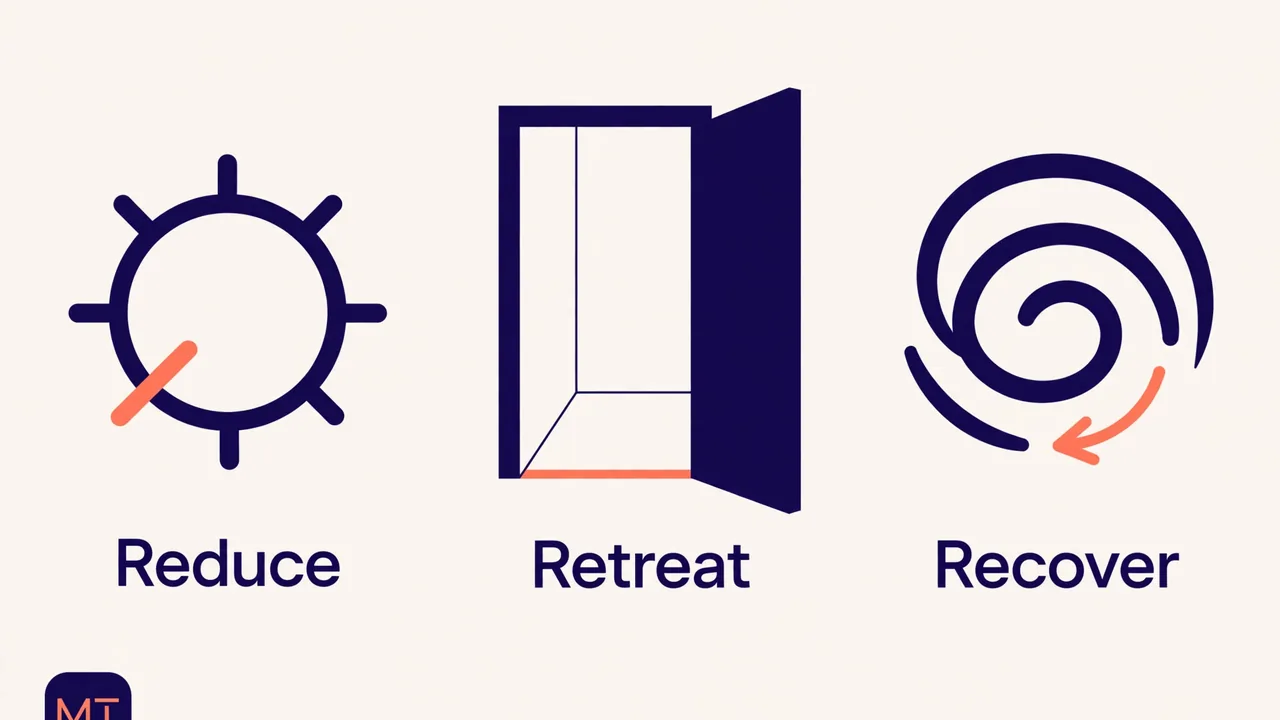
The reliable pattern is reduce, retreat, recover:
- Reduce the input: lower the volume, dim the lights, step away from screens, or move to the edge of the crowd.
- Retreat briefly: a few quiet minutes in another room, outside, or even a bathroom stall can reset your tolerance. Short breaks beat pushing through until you snap.
- Use one sense at a time: slow breathing, cold water on your face, or a familiar song at low volume gives your attention a single, manageable channel.
- Plan ahead: if you know an event drains you, arrive with an exit plan, take breaks before you need them, and protect sleep the night before, since tiredness lowers everyone’s threshold.
For a child or baby, the same logic applies: calmer space, fewer inputs, familiar comfort, and time. If overstimulation is frequent, severe, or interfering with daily life, or if you are concerned about a child’s development, a pediatrician or other clinician is the right next step. This article explains a word; it cannot diagnose anyone.
Examples of Overstimulated in Conversation
Person A: “Why did you leave the mall so fast?”
Person B: “The music, the crowds, the lights, I was completely overstimulated.”
Interpretation: Person B is naming sensory overload as the reason for leaving, not boredom or dislike of the company.
Person A: “The baby was fine all morning, then fell apart at the party.”
Person B: “Classic overstimulation. Too many new faces passing her around.”
Interpretation: the word explains a baby’s meltdown as too much input, with an implied fix: a quieter space.
FAQs
Can adults get overstimulated, or is it just for babies?
Adults get overstimulated too. The word started appearing in both contexts, and anyone can hit a limit with enough noise, light, crowding, or activity, especially when tired.
Is being overstimulated a medical condition?
No. It describes a temporary state, not a diagnosis. It is discussed more often in connection with babies, sensory processing differences, ADHD, and autism, because those groups may reach the state more easily.
How long does overstimulation last?
It varies. Once the input drops, many people settle within minutes to an hour. Children and babies may need a nap or a longer quiet stretch.
What is the difference between overstimulated and overwhelmed?
Overstimulated is about sensory input being too much at once. Overwhelmed is about demands and responsibilities piling up. They can happen together but have different fixes.
What Should You Remember About Overstimulated?
Overstimulated means the input around you has outpaced what you can process, and the strain you feel is a response to volume and pace, not a character flaw. The clearest proof is in the fix: when the noise, light, and activity drop, the feeling usually drops with them. That cause-and-effect link is the heart of the word.
Used well, the word is a precise, low-drama way to explain a need. “I am getting overstimulated, I need ten quiet minutes” tells people exactly what is wrong and what would help. If the state shows up constantly or a child’s reactions worry you, treat the word as a starting point for a conversation with a clinician, not as an answer by itself.