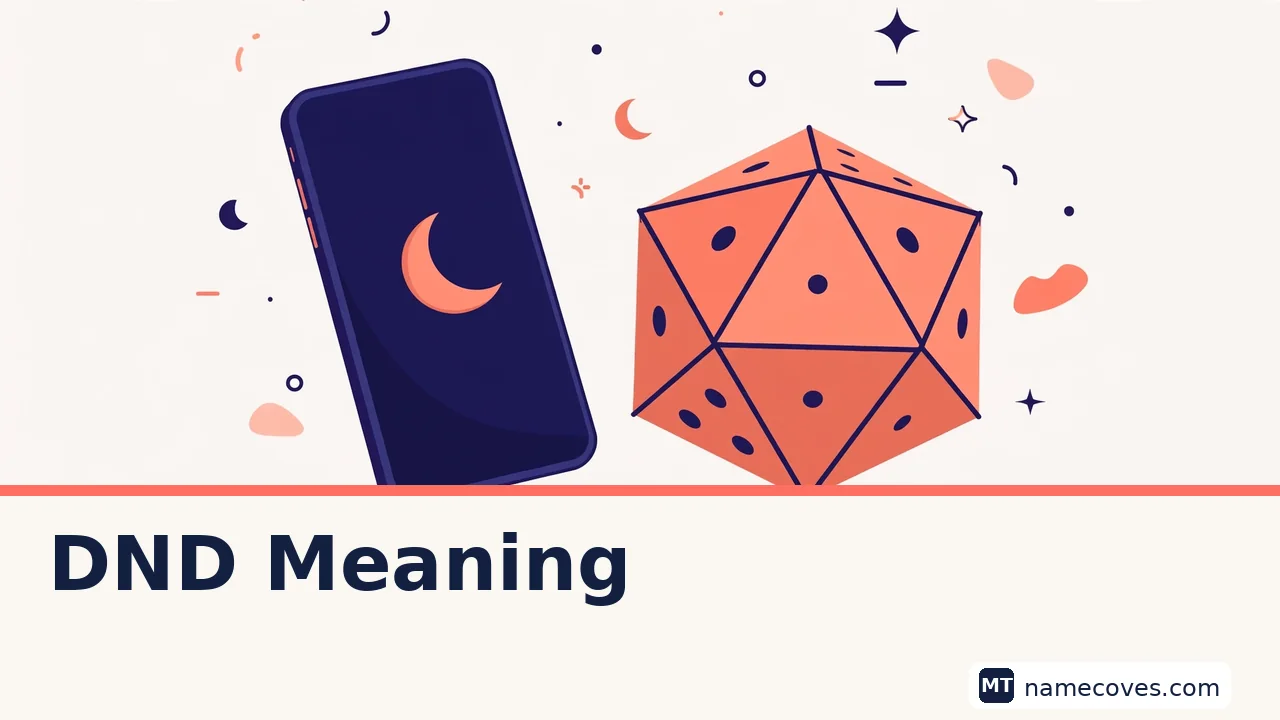
DND has two common meanings, and context decides which one applies. In texts and on phones, DND means “do not disturb”: the person is busy or has silenced notifications. In gaming conversations, DND usually refers to Dungeons & Dragons, the tabletop role-playing game, more often written D&D.
The three letters show up in very different places. A friend replies “dnd” when you ask if they can talk. A coworker’s status shows a small moon icon with DND turned on. Then a gaming group chat starts planning “dnd night,” and it clearly has nothing to do with silencing a phone.
Both readings are real, established uses, so there is no single answer that fits every message. What separates them is the topic around the letters, and once you know what to look for, the intended meaning is almost always obvious.
What Does DND Mean?
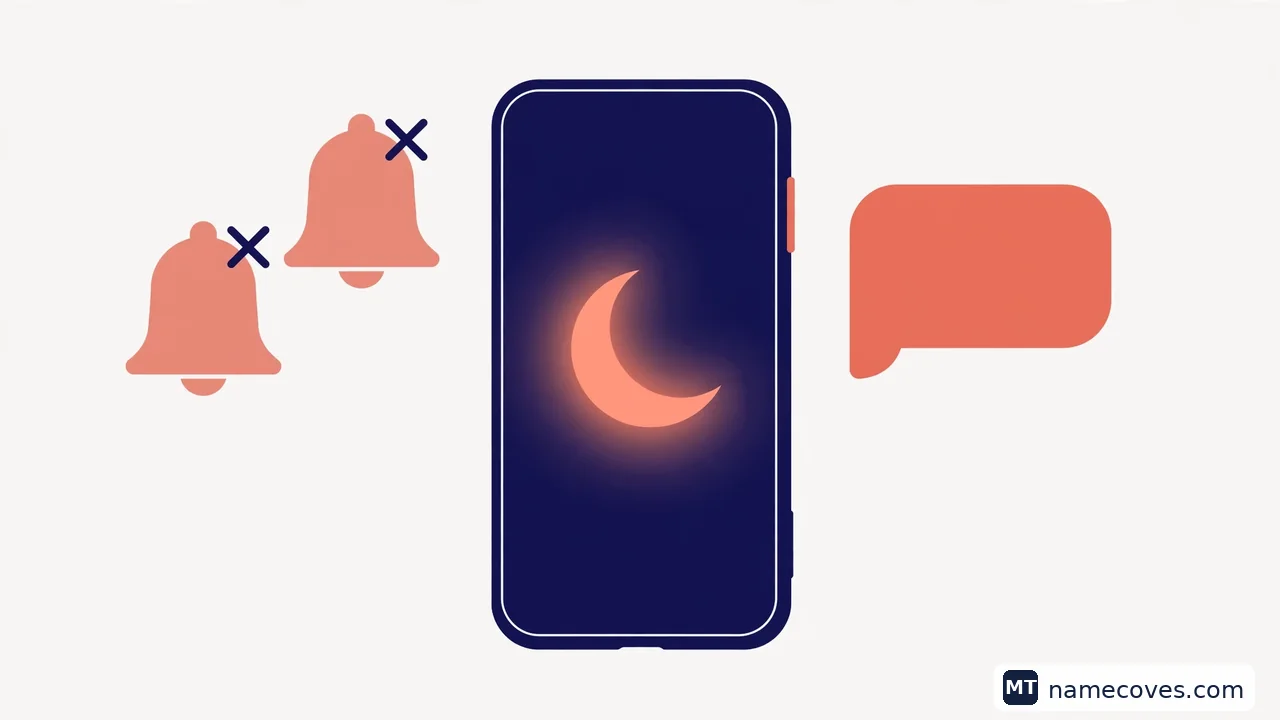
In everyday messaging, DND stands for “do not disturb.” Someone who writes it is telling you they are busy, resting, studying, in a meeting, or simply not available to chat right now. It is a short, polite way to set a boundary without a long explanation.
The same phrase names a built-in phone feature. Do Not Disturb mode on iPhones and Android phones silences calls, alerts, and notifications for a set period or until you turn it off, with options to let certain contacts through. When someone says they “had DND on,” they usually mean this setting, and it explains why they missed your call or replied hours later.
The gaming meaning is separate. In hobby and gaming spaces, DND refers to Dungeons & Dragons, the fantasy tabletop role-playing game in which players create characters and go on adventures guided by a storyteller. The game’s official abbreviation is D&D, but many players drop the ampersand and type DND, especially in usernames, hashtags, and quick messages.
What Does Each Letter Stand For?
For the common texting meaning, the breakdown is direct:
- D = Do
- N = Not
- D = Disturb
For the gaming meaning, the letters come from a name rather than a phrase: Dungeons & Dragons. There is no “N” word in it at all, because the original abbreviation uses an ampersand, D&D. That is why the gaming and texting uses are unrelated coincidences, not branches of one meaning.
How Does Context Change the Meaning?
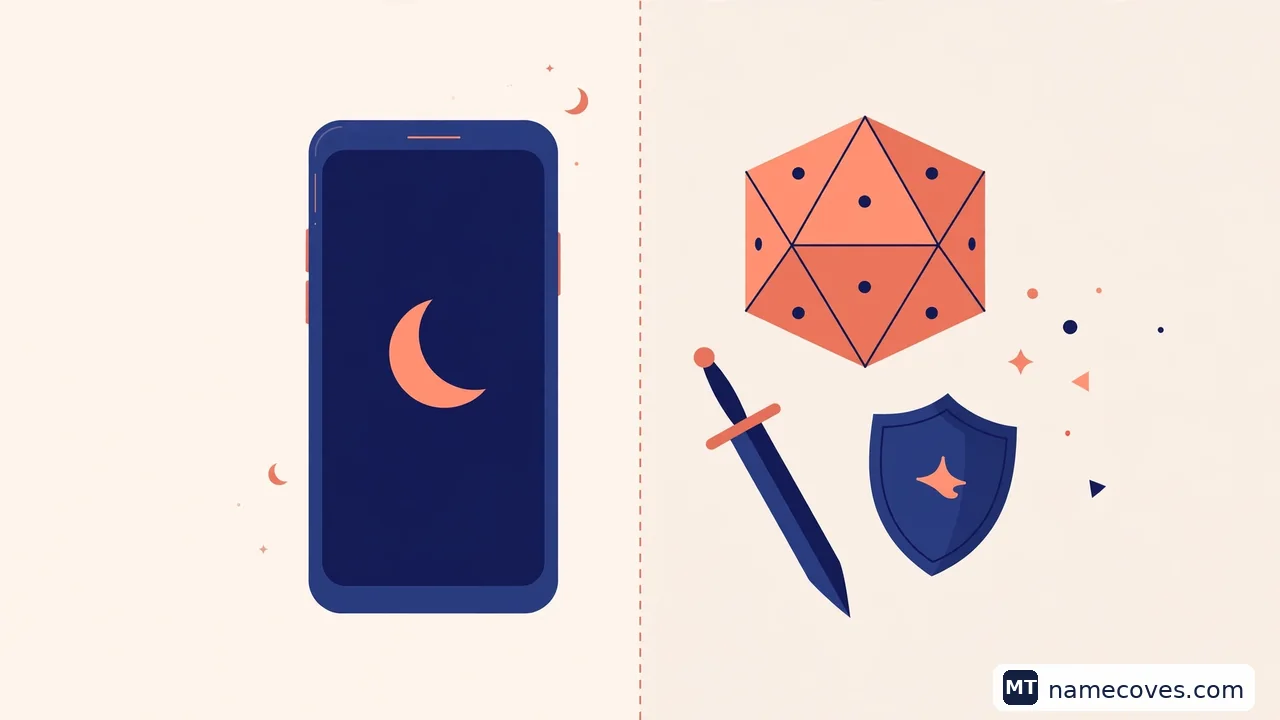
Because both meanings are common, read the letters against whatever surrounds them. Three settings cover almost every case.
In a Text or Chat
If DND appears as a reply to “can you talk?” or in a message about being busy, it means do not disturb. The topic is availability, and the sender is asking for space or explaining silence. Tone markers help too: a message like “sorry, was on dnd” is an apology for a late reply, not a comment about a game.
On a Phone or in an App
Near words like mode, settings, notifications, or focus, DND is the do not disturb feature. Messaging and social apps also use do-not-disturb style statuses, so a DND badge on someone’s profile means they have muted alerts, and it is a signal about how fast they will respond.
In Gaming Conversations
Surrounded by words like campaign, character, dice, session, or DM (dungeon master), DND is Dungeons & Dragons. A message such as “dnd moved to Saturday” in a gaming group is about rescheduling a game session. Nobody in that chat is asking to be left alone.
Examples of DND in Conversation
Person A: “Call you in 10?” Person B: “Can’t, in a lecture, dnd till 3.” Interpretation: Person B is asking not to be disturbed until 3, using the texting meaning.
Person A: “You never answered last night.” Person B: “My phone was on DND, just saw this.” Interpretation: Person B had the do not disturb feature switched on, so the message arrived silently.
Person A: “DND this Friday? I finally finished my character.” Person B: “Yes, bring dice.” Interpretation: This is the gaming meaning. The character and dice references make the reading certain.
How Do You Reply to DND?
When someone uses DND to mean do not disturb, the best reply is short and light, or no reply at all until later. The whole point of the message is that they cannot talk now.
- Respect it simply: “No worries, talk later.”
- Leave the information and stop: “Meeting moved to 4, no rush.” This lets them catch up without a conversation.
- If it may be urgent: one brief message explaining why, then wait. Sending a stream of follow-ups works against what they asked for.
If the context is gaming, reply about the game instead: confirm the session time, ask what to bring, or share your character update. If you genuinely cannot tell which meaning was intended, a short clarification such as “Busy, or game night?” resolves it without awkwardness.
When Should You Use or Avoid DND?
DND works well in informal chats with friends, in group messages, and as a quick status explanation among people who already use abbreviations. It is casual in tone, so it fits casual settings.
Avoid it where clarity matters more than speed. In a work email, a message to a teacher, or any first contact, write “do not disturb” or “I will be unavailable until 3” in full. Some readers will not know the abbreviation, and others may read gaming into it. In gaming spaces, typing D&D for the game avoids confusion entirely, since DND there competes with the phone meaning.
FAQs
What does DND mean in texting?
In texting, DND means “do not disturb.” The sender is busy or unavailable and is asking you not to message or call for a while, or explaining why they went quiet.
What does DND mean on a phone?
It is the Do Not Disturb mode, a setting that silences calls, texts, and notifications. Calls may go to voicemail, and alerts wait silently until the mode is turned off or scheduled hours end.
Is DND the same as D&D?
Not exactly. D&D is the standard abbreviation for Dungeons & Dragons. People often type DND for the game in casual online writing, but in most other contexts DND means do not disturb.
Is DND rude?
Usually not. It can read as blunt if it arrives with no context, but most people use it as a neutral, practical note about availability. Adding a time, such as “dnd till 3,” makes it friendlier and clearer.
What does it mean if someone’s status says DND?
They have likely turned on a do not disturb or focus status, so they are not getting alerts in real time. Send your message if you like, but expect a delayed reply.
What Should You Remember About DND?
DND carries two established meanings: “do not disturb” in messages and phone settings, and Dungeons & Dragons in gaming talk. The letters alone do not tell you which one a sender means. The topic around them does, so check if the conversation is about availability or about a game before you respond.
In practice, reply to the meaning that fits. If a friend signals do not disturb, keep your answer to one short line and let them come back to you. If a group is planning a session, answer the plan. When the clues truly point both ways, one quick question costs nothing and clears it up.