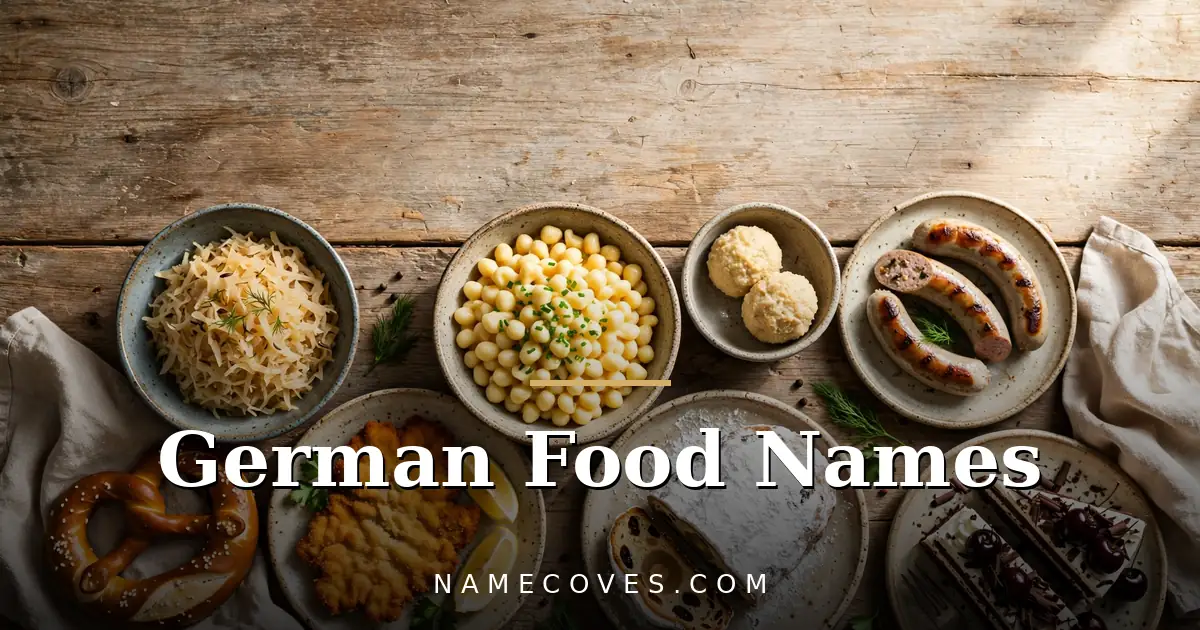
German food names have a special kind of charm. Some sound cozy and traditional, like Kuchen and Brezel. Others feel bold and playful, like Bratwurst or Schnitzel. Then there are names such as Maultaschen, Stollen, and Franzbrötchen that instantly create a sense of place, history, and personality.
If you’re searching for German food names for a pet, character, username, restaurant, food brand, fictional world, or simply because you love German culture, this list gives you plenty of directions to explore.
German cuisine is much more varied than the familiar trio of bratwurst, sauerkraut, and beer. Germany’s regional cooking traditions stretch from the North Sea to the Alps and include hearty meals, breads, pastries, sausages, potato dishes, seafood, cakes, and seasonal specialties. Germany’s official tourism organization describes this regional diversity as one of the defining characteristics of German culinary culture.
What Makes a German Food Name So Appealing?
A good German food name can communicate personality before anyone knows its meaning.
Brezel feels cute, warm, and slightly mischievous. Schnitzel feels funny and energetic. Stollen has a softer, vintage Christmas atmosphere. Kaiser sounds grand and powerful, although it is important to distinguish a food-related expression from a personal name or historical title.
German culinary vocabulary is especially interesting because food is closely connected to regional landscapes, local agriculture, seasonal traditions, and history. Germany’s cuisine has developed differently across its regions rather than following one single national culinary style.
That makes German food names particularly useful when you want a name with character rather than a generic food reference.
Featured Snippet: Best German Food Names
Some of the most recognizable and name-friendly German food names include:
|
Name |
Food |
Overall Vibe |
Naming Style |
|---|---|---|---|
|
Brezel |
Pretzel |
Cute, playful |
Short & memorable |
|
Schnitzel |
Breaded cutlet |
Funny, energetic |
Quirky |
|
Bratwurst |
Sausage |
Bold, humorous |
Classic German |
|
Strudel |
Pastry |
Soft, elegant |
Sweet |
|
Stollen |
Fruit bread |
Vintage, cozy |
Traditional |
|
Maultaschen |
Filled pasta |
Quirky, distinctive |
Regional |
|
Spätzle |
Egg noodles |
Cute, unusual |
Playful |
|
Knödel |
Dumpling |
Cozy, funny |
Short |
|
Sauerkraut |
Fermented cabbage |
Rustic, unmistakable |
Iconic |
|
Currywurst |
Sausage dish |
Urban, energetic |
Modern-classic |
|
Lebkuchen |
Gingerbread |
Warm, festive |
Christmas aesthetic |
|
Franzbrötchen |
Pastry |
Cute, distinctive |
Northern German |
|
Kartoffel |
Potato |
Rustic, charming |
Food-inspired |
|
Kuchen |
Cake |
Sweet, simple |
Soft |
|
Apfelstrudel |
Apple strudel |
Romantic, cozy |
Dessert-inspired |
If you want a name that immediately feels German, Brezel, Schnitzel, Spätzle, Knödel, Bratwurst, Stollen, and Maultaschen are particularly recognizable choices.
Best German Food Names
1. Brezel
Meaning: German term for a pretzel Origin: German culinary tradition Language: German Pronunciation: Approximately BRAY-tsel Gender: Unisex as a naming choice Personality vibe: Cheerful, affectionate, playful Aesthetic: Cozy European, bakery-core, rustic Modern vs. classic: Classic food name with modern nickname appeal Nicknames: Brez, Bree Similar names: Pretzel, Knödel, Spätzle
Brezel is one of the easiest German food names to turn into a cute nickname. It works especially well for a small, energetic, mischievous character or pet.
German tourism materials specifically feature the Bavarian Laugenbrezel as part of Germany’s regional bread culture.
2. Schnitzel
Meaning: A breaded or prepared cutlet; the term is used across German-speaking culinary traditions Language: German Gender: Unisex Personality vibe: Funny, confident, slightly chaotic Aesthetic: Quirky European Nicknames: Schnitz, Schnitzy Similar names: Bratwurst, Knödel, Spätzle
Schnitzel has a naturally comic sound in English-speaking contexts, which makes it excellent for a humorous pet or fictional character.
It feels much more playful than elegant, so choose it when you want the name to make people smile.
3. Bratwurst
Meaning: A type of German sausage Language: German Gender: Unisex Personality vibe: Bold, funny, traditional Aesthetic: Beer garden, rustic, Oktoberfest-inspired Modern vs. classic: Strongly traditional
Bratwurst is one of the most recognizable German food terms internationally. Germany’s tourism organization identifies Thüringer Rostbratwurst as a culinary tradition with roughly 600 years of heritage.
As a name, Brat can also work as a deliberately cheeky nickname, although English speakers may interpret that word independently.
4. Spätzle
Meaning: Traditional German-style egg noodles Origin: Particularly associated with Swabian and southern German cuisine Language: German Gender: Unisex Personality vibe: Cute, quirky, friendly Aesthetic: Rustic European Nicknames: Spätz, Spätzli Similar names: Knödel, Maultaschen
Spätzle has a wonderful naming quality because it sounds unusual without being excessively long.
It is especially fitting for a playful character or pet with a slightly eccentric personality.
5. Knödel
Meaning: Dumpling Language: German Gender: Unisex Personality vibe: Round, cozy, cuddly Aesthetic: Alpine, rustic, cottagecore Nicknames: Knödi Similar names: Spätzle, Brezel
If you want a name that feels soft and cuddly, Knödel is one of the strongest choices.
The word’s sound naturally suggests something small and round, making it particularly fun for an animal name.
Cute German Food Names
Not every German food name needs to sound serious or traditional. Some have an adorable rhythm that makes them perfect for pets, characters, usernames, or children’s fictional worlds.
|
Name |
Food association |
Cute factor |
Personality |
|---|---|---|---|
|
Brezel |
Pretzel |
★★★★★ |
Playful |
|
Spätzle |
Egg noodles |
★★★★★ |
Mischievous |
|
Knödel |
Dumpling |
★★★★★ |
Cuddly |
|
Kuchen |
Cake |
★★★★★ |
Sweet |
|
Keks |
Biscuit/cookie |
★★★★★ |
Tiny & cheerful |
|
Waffel |
Waffle |
★★★★★ |
Friendly |
|
Apfel |
Apple |
★★★★☆ |
Fresh |
|
Nudel |
Noodle |
★★★★★ |
Silly |
|
Pfannkuchen |
Pancake |
★★★★☆ |
Whimsical |
|
Bonbon |
Candy |
★★★★★ |
Sweet |
|
Gummibär |
Gummy bear |
★★★★★ |
Playful |
|
Marzipan |
Marzipan |
★★★★☆ |
Elegant-sweet |
|
Stollen |
Fruit bread |
★★★★☆ |
Cozy |
|
Lebkuchen |
Gingerbread |
★★★★★ |
Festive |
Keks
Keks means “cookie” or “biscuit” in modern German usage.
As a name, it is short, punchy, and adorable. It has the same appeal as naming something Cookie, but with a distinctly German identity.
Kuchen
Kuchen is the German word for cake.
It feels softer and more understated than a name like Bratwurst. For a character, pet, or online alias, Kuchen gives off a warm bakery aesthetic.
Waffel
Waffel means waffle.
It is a particularly good choice for someone looking for a food name that sounds recognizable even to people who do not speak German.
Nudel
Nudel means noodle.
It is deliberately silly and works beautifully for a goofy character, playful pet, or humorous username.
Funny German Food Names
If your goal is to make people smile, choose a name with a strong sound and an unexpected food association.
Here are some of the funniest options:
- Schnitzel
- Bratwurst
- Knödel
- Spätzle
- Sauerkraut
- Maultaschen
- Kartoffel
- Pfannkuchen
- Nudel
- Wurst
- Kloß
- Semmel
- Leberkäse
- Currywurst
- Fischbrötchen
- Kartoffelpuffer
- Grünkohl
- Schmalz
- Gummibär
- Zwiebel
Why Long German Words Can Be Funny
German compound words are famous for their ability to combine several concepts into one word. Food vocabulary provides plenty of examples.
Kartoffelpuffer, for instance, combines Kartoffel (potato) with Puffer, referring to the potato pancake preparation.
Fischbrötchen literally combines fish with a bread roll, producing a word that is both descriptive and wonderfully distinctive.
These longer names can be especially effective for fictional characters because they feel memorable and immediately give the character a comic identity.
Traditional German Food Names
If cultural authenticity matters more than novelty, look toward dishes with strong regional or historical connections.
Germany’s culinary traditions are highly regional. Northern cuisine has long included fish and seafood, while southern regions such as Bavaria, Baden, and Württemberg are associated with many internationally recognized German dishes.
Maultaschen
Origin: Swabia, southern Germany Food: Filled pasta pockets Personality vibe: Clever, traditional, distinctive Aesthetic: Old-world European
Maultaschen is one of the most interesting German food names because it does not immediately resemble an English food word.
Germany Travel identifies Swabian Maultaschen as a regional specialty and notes the traditional story that pasta dough was used to conceal meat during Lent.
For naming, Maultaschen works beautifully when you want something unusual, strongly regional, and unmistakably German.
Currywurst
Origin: German street-food tradition Food: Sausage served with curry-seasoned sauce Personality vibe: Urban, energetic, bold Aesthetic: Berlin street-food culture
Currywurst is a particularly good choice for a modern character or username because it has a contemporary street-food identity.
Germany Travel describes Currywurst as a famous Berlin street-food specialty while noting that Berlin, Hamburg, and the Ruhr region all have competing claims around its invention.
Sauerkraut
Food: Fermented cabbage Personality vibe: Rustic, strong, unmistakable Aesthetic: Traditional German
Sauerkraut is perhaps one of the most globally recognizable German culinary words.
As a personal naming choice, it is intentionally bold. It works best if you want humor rather than subtle elegance.
Kartoffel
Meaning: Potato Language: German Personality vibe: Warm, earthy, humble Aesthetic: Rustic, cottagecore, countryside
Kartoffel is a surprisingly versatile naming word.
Germany Travel notes that the potato has deeply rooted regional traditions in Germany and even has different regional names, including Grumbeere and Tüfte.
That makes Kartoffel particularly interesting for a name with a countryside or old-Europe atmosphere.
Sweet German Food Names
German desserts and baked goods offer some of the prettiest food-inspired names.
|
Name |
Food |
Vibe |
Best use |
|---|---|---|---|
|
Stollen |
Fruit bread |
Vintage, festive |
Pet/character |
|
Lebkuchen |
Gingerbread |
Magical, Christmas-like |
Character |
|
Kuchen |
Cake |
Soft, cozy |
Pet |
|
Marzipan |
Almond confection |
Elegant |
Pet/character |
|
Strudel |
Pastry |
Romantic |
Character |
|
Apfel |
Apple |
Natural |
Pet |
|
Kirsche |
Cherry |
Feminine-soft aesthetic |
Character |
|
Pflaume |
Plum |
Quirky, vintage |
Character |
|
Franzbrötchen |
Pastry |
Cute, distinctive |
Username |
|
Eierschecke |
Cake |
Unusual, regional |
Creative project |
|
Christstollen |
Christmas bread |
Traditional |
Festive name |
|
Berliner |
Pastry association |
Familiar, playful |
Username |
Stollen
Stollen has a distinctly wintery and vintage feeling.
It is associated with German Christmas baking, and Germany Travel includes Stollen among the country’s seasonal culinary classics.
As a name, Stollen feels old-fashioned in a charming way.
Lebkuchen
Lebkuchen is strongly connected with German gingerbread traditions.
Its sound feels almost fantasy-like, making it a wonderful choice for a character in a winter story, cozy game, Christmas-themed project, or magical setting.
Franzbrötchen
Franzbrötchen is a pastry associated with Hamburg and northern Germany.
It is longer than most practical nicknames, but that can actually make it fun. Franz can serve as a natural short form while preserving the original culinary inspiration.
Germany’s bread-culture guide lists Hamburger Franzbrötchen among regional German breads and baked specialties.
German Food Names for Dogs
Food names are especially popular for pets because they feel affectionate rather than formal.
For dogs, consider the personality of the animal.
For a small dog
- Brezel
- Keks
- Knödel
- Spätzle
- Waffel
- Bonbon
- Gummibär
- Kuchen
- Nudel
- Marzipan
For a large dog
- Bratwurst
- Schnitzel
- Sauerbraten
- Kartoffel
- Kaiser
- Currywurst
- Strudel
- Sauerkraut
For a goofy dog
- Schnitzel
- Knödel
- Nudel
- Bratwurst
- Kartoffel
- Pfannkuchen
- Leberkäse
For an elegant dog
- Marzipan
- Strudel
- Stollen
- Kirsche
- Apfel
- Franz
- Kuchen
Brezel is especially versatile because it sounds affectionate, is easy to say, and has a recognizable German association.
German Food Names for Cats
Cats often suit names that are mysterious, elegant, tiny, or slightly ridiculous.
Some strong choices include:
Elegant: Marzipan, Kirsche, Strudel, Stollen
Funny: Schnitzel, Knödel, Kartoffel, Wurst
Cute: Brezel, Keks, Spätzle, Nudel
Dark/cozy: Schwarzbrot, Lebkuchen, Schokolade, Kaffee
Quirky: Maultaschen, Pfannkuchen, Fischbrötchen
A cat named Kartoffel has an entirely different personality impression from a cat named Marzipan. That difference is exactly what makes food names useful: the name becomes a tiny piece of character design.
German Food Names for Characters
Food names can also work surprisingly well for fictional characters.
For a comedy character, names such as Schnitzel, Bratwurst, Knödel, Kartoffel, and Spätzle immediately create a playful impression.
For a cozy fantasy character, Lebkuchen, Marzipan, Stollen, and Kirsche feel warmer and more atmospheric.
For a rugged rural character, Sauerkraut, Sauerbraten, Wurst, and Kartoffel can suggest an earthy, traditional world.
For a quirky fantasy world, longer words such as Maultaschen, Franzbrötchen, Pfannkuchen, and Kartoffelpuffer can become memorable fictional names.
Character Naming Trick
Instead of asking only, “Does this food name sound German?”, ask:
What personality does this food name create?
|
Name |
First impression |
|---|---|
|
Brezel |
Friendly and mischievous |
|
Schnitzel |
Comedic and energetic |
|
Marzipan |
Refined and sweet |
|
Kartoffel |
Earthy and humorous |
|
Maultaschen |
Clever and eccentric |
|
Lebkuchen |
Magical and cozy |
|
Bratwurst |
Bold and comic |
|
Stollen |
Vintage and seasonal |
|
Spätzle |
Playful and unusual |
|
Currywurst |
Urban and lively |
These personality descriptions are naming interpretations, not traditional meanings of the foods.
German Food Names by Aesthetic
Cozy German Food Names
For a warm, cottagecore, bakery, or countryside aesthetic:
- Brezel
- Kuchen
- Knödel
- Stollen
- Lebkuchen
- Apfel
- Kartoffel
- Spätzle
- Waffel
- Marzipan
These work especially well with cozy social-media aesthetics, food blogs, lifestyle accounts, and fictional settings inspired by old European villages.
Vintage German Food Names
For a nostalgic, old-world feeling:
- Stollen
- Sauerbraten
- Maultaschen
- Lebkuchen
- Schwarzbrot
- Kartoffelpuffer
- Leberkäse
- Semmel
- Strudel
- Eierschecke
Germany’s culinary traditions include many foods passed down through generations, with regional ingredients and historical influences shaping local dishes.
Funny German Food Names
- Schnitzel
- Bratwurst
- Wurst
- Knödel
- Spätzle
- Kartoffel
- Nudel
- Sauerkraut
- Pfannkuchen
- Maultaschen
Elegant German Food Names
- Marzipan
- Strudel
- Kirsche
- Apfel
- Stollen
- Kuchen
- Lebkuchen
Rustic German Food Names
- Kartoffel
- Sauerkraut
- Schwarzbrot
- Bratwurst
- Sauerbraten
- Knödel
- Grünkohl
- Wurst
Christmas-Inspired German Food Names
- Stollen
- Lebkuchen
- Marzipan
- Zimt
- Vanille
- Kirsche
- Apfel
- Plätzchen
- Christstollen
German seasonal food culture is particularly rich around winter, with Stollen among the country’s recognized seasonal classics.
Regional German Food Names
One of the easiest ways to make your choice more meaningful is to choose a food connected to a particular part of Germany.
|
Region |
Food name inspiration |
Naming personality |
|---|---|---|
|
Bavaria |
Brezel |
Cheerful, traditional |
|
Swabia |
Maultaschen |
Distinctive, clever |
|
Thuringia |
Rostbratwurst |
Bold, classic |
|
Berlin |
Currywurst |
Urban, energetic |
|
Hamburg |
Franzbrötchen |
Cute, modern |
|
Saxony |
Eierschecke |
Vintage, unusual |
|
Hesse |
Grüne Soße |
Fresh, distinctive |
|
North Germany |
Fischbrötchen |
Rustic, coastal |
|
Palatinate |
Saumagen |
Strong, humorous |
|
Black Forest |
Schwarzwälder specialties |
Romantic, woodland |
Regional association matters because “German food” is not a single uniform category. Northern Germany has strong fish and seafood traditions, while southern areas have their own distinctive dishes and baking traditions.
Bavarian-Inspired Names
Brezel, Knödel, Wurst, Weißwurst, Obatzda, Kartoffel
Vibe: Alpine, cheerful, traditional, beer-garden-inspired.
Swabian-Inspired Names
Maultaschen, Spätzle, Schupfnudel
Vibe: Rustic, distinctive, regional.
Germany Travel specifically highlights Swabian Maultaschen as a regional specialty.
Berlin-Inspired Names
Currywurst, Berliner, Pfannkuchen
Vibe: Urban, playful, street-food culture.
Hamburg-Inspired Names
Franzbrötchen, Fischbrötchen
Vibe: Coastal, modern, northern, casual.
Franzbrötchen is specifically listed as a Hamburg specialty in Germany’s regional bread guide.
German Food Names That Sound Like Personal Names
This is one of the most useful naming angles if you want a food-inspired name that does not immediately sound like a dish.
Franz
Inspired by Franzbrötchen, Franz is already a conventional German masculine given name.
It therefore works well when you want a subtle food connection rather than an obvious culinary joke.
Kirsche
Meaning cherry, Kirsche has a soft sound and a more poetic aesthetic.
Apfel
Meaning apple, Apfel is simple, natural, and memorable.
Marzipan
Marzipan sounds almost like a fantasy character name. It works especially well for an elegant or whimsical fictional character.
Stollen
Stollen feels like an old surname or fantasy-world name even though it is strongly associated with German Christmas baking.
This is an example of a useful naming principle:
The best food-inspired names do not always sound like food names.
German Food Names and Their Pronunciation
German pronunciation can make a name feel more authentic, but exact pronunciation matters.
Here are several useful approximations:
|
Name |
Approximate English pronunciation |
|---|---|
|
Brezel |
BRAY-tsel |
|
Spätzle |
SHPET-sleh |
|
Knödel |
KNUH-dəl |
|
Schnitzel |
SHNIT-səl |
|
Bratwurst |
BRAHT-voorst |
|
Sauerkraut |
ZOW-er-krowt |
|
Maultaschen |
MOWL-tah-shen |
|
Lebkuchen |
LAYP-koo-khen |
|
Stollen |
SHTOL-en |
|
Kartoffel |
kar-TOFF-el |
|
Kuchen |
KOO-khen |
|
Strudel |
SHTROO-del |
These are learner-friendly approximations, not replacements for native German phonetics. German pronunciation varies somewhat by speaker and region.
If authenticity matters, preserve German spellings such as ä, ö, and ü rather than automatically removing the umlauts.
Lucky Numbers, Colors, Stones, and Zodiac Associations
Traditional German food names generally do not have historically established lucky numbers, lucky colors, gemstones, lucky days, or zodiac associations.
It would be misleading to invent those attributes and present them as German cultural facts.
For naming websites, however, these can be offered as modern, playful associations if clearly labeled as such.
For example:
|
Name |
Modern aesthetic association |
Not a traditional meaning |
|---|---|---|
|
Brezel |
Golden yellow |
Cozy, cheerful |
|
Marzipan |
Ivory |
Elegant, delicate |
|
Lebkuchen |
Warm brown |
Festive, nostalgic |
|
Kirsche |
Deep red |
Romantic, vibrant |
|
Kartoffel |
Earth brown |
Rustic, grounded |
|
Stollen |
Cream/gold |
Vintage Christmas |
|
Spätzle |
Warm cream |
Cozy, playful |
These are aesthetic interpretations rather than historical German naming traditions.
Name Personality Guide
If you are choosing a German food name based on personality, this quick guide can make the decision easier.
For a playful personality
Choose Brezel, Spätzle, Knödel, Schnitzel, or Nudel.
For a bold personality
Choose Bratwurst, Currywurst, Sauerkraut, or Sauerbraten.
For a sweet personality
Choose Kuchen, Keks, Marzipan, Lebkuchen, or Waffel.
For a mysterious personality
Choose Maultaschen, Stollen, Schwarzbrot, or Lebkuchen.
For a sophisticated personality
Choose Marzipan, Strudel, Kirsche, or Franz.
For a rustic personality
Choose Kartoffel, Knödel, Schwarzbrot, Grünkohl, or Sauerbraten.
Nickname-Friendly German Food Names
If this name will be spoken frequently, nickname potential matters.
|
Full name |
Possible nickname |
|---|---|
|
Brezel |
Brez |
|
Schnitzel |
Schnitz |
|
Bratwurst |
Brat |
|
Spätzle |
Spätz |
|
Maultaschen |
Mauli |
|
Kartoffel |
Karto |
|
Franzbrötchen |
Franz |
|
Lebkuchen |
Lebi |
|
Marzipan |
Marzi |
|
Pfannkuchen |
Pfanni |
|
Gummibär |
Gummi |
|
Sauerkraut |
Sauer |
Some of these short forms are creative naming adaptations, not established German nicknames.
That distinction is important. A nickname can be invented for usability without claiming that native German speakers traditionally use it.
Modern vs. Classic German Food Names
Classic-feeling
- Bratwurst
- Sauerkraut
- Schnitzel
- Stollen
- Knödel
- Brezel
- Sauerbraten
- Kartoffel
These feel immediately connected to traditional German cuisine.
More distinctive
- Maultaschen
- Spätzle
- Franzbrötchen
- Eierschecke
- Fischbrötchen
- Kartoffelpuffer
- Schupfnudel
These are useful when you want a name that feels less predictable.
Soft and modern
- Keks
- Marzipan
- Apfel
- Kirsche
- Kuchen
- Waffel
These work especially well for usernames, pets, characters, and aesthetic social profiles.
German Food Names for Usernames
For a username, shorter names usually have an advantage because they are easier to remember and type.
Good options include:
Brezel
Spätzle
Knödel
Keks
Kartoffel
Marzipan
Stollen
Kuchen
Waffel
Schnitzel
If the basic name is unavailable, combine it with a neutral word rather than stuffing it with random numbers.
Examples:
- BrezelHaus
- KartoffelClub
- SpätzleStudio
- MarzipanMoon
- StollenStory
- KeksGarden
- KnödelCorner
- BrezelHaus
- SchnitzelLab
These combinations are creative examples, not claims about existing accounts.
German Food Names for Restaurants and Food Brands
German food vocabulary can also inspire restaurant and brand naming.
Names such as Brezel Haus, Kartoffel, Kuchenhaus, Spätzle, and Wurstwerk can create a strong culinary identity.
For a premium brand, softer terms such as Marzipan, Kirsche, Stollen, or Kuchen can feel more refined.
For a street-food concept, Currywurst, Bratwurst, and Fischbrötchen communicate a much more casual personality.
For a bakery, Brezel, Kuchen, Stollen, Lebkuchen, and Franzbrötchen are especially relevant because Germany has an exceptionally diverse bread and baking culture. Germany Travel’s regional bread guide lists distinctive breads and baked goods from all 16 German federal states.
The 25 Most Nameable German Foods
If you do not want to browse through a huge list, start here:
- Brezel — playful and instantly recognizable
- Spätzle — quirky and cute
- Knödel — cozy and cuddly
- Schnitzel — funny and energetic
- Marzipan — elegant and sweet
- Kartoffel — rustic and humorous
- Stollen — vintage and festive
- Lebkuchen — magical and cozy
- Kuchen — soft and simple
- Keks — short and adorable
- Bratwurst — bold and comic
- Maultaschen — distinctive and regional
- Currywurst — urban and energetic
- Strudel — romantic and European
- Waffel — cheerful and friendly
- Sauerkraut — unmistakably German
- Nudel — silly and affectionate
- Kirsche — delicate and colorful
- Apfel — natural and simple
- Pfannkuchen — whimsical and funny
- Franzbrötchen — distinctive and northern
- Sauerbraten — traditional and hearty
- Schwarzbrot — dark and rustic
- Gummibär — playful and nostalgic
- Kartoffelpuffer — humorous and memorable
How to Choose the Right German Food Name
The best choice depends less on the food itself and more on the impression you want the name to create.
If you want cute, look at Brezel, Keks, Spätzle, Knödel, and Waffel.
If you want funny, choose Schnitzel, Bratwurst, Kartoffel, Nudel, or Pfannkuchen.
If you want elegant, consider Marzipan, Kirsche, Strudel, or Kuchen.
If you want traditional, look at Bratwurst, Sauerkraut, Stollen, Knödel, and Sauerbraten.
If you want regional, Maultaschen, Franzbrötchen, Currywurst, and Eierschecke give you stronger geographic associations.
If you want short and easy, Brezel, Keks, Apfel, Waffel, and Kuchen are practical choices.
If you want unusual, Maultaschen, Eierschecke, Fischbrötchen, Kartoffelpuffer, and Franzbrötchen stand out.
The most important test is simple: say the name out loud.
A name may look beautiful on a screen but feel awkward when spoken. For pets and characters especially, choose something that remains recognizable after dozens of repetitions.
FAQs About German Food Names
What are some popular German food names?
Some of the most recognizable German food names include Bratwurst, Schnitzel, Sauerkraut, Brezel, Spätzle, Knödel, Maultaschen, Stollen, Currywurst, and Kartoffel.
Germany’s cuisine is highly regional, so the idea of a single definitive list of “German foods” can be misleading. Different regions have developed their own specialties based on local ingredients, history, and traditions.
What is a cute German food name?
Brezel, Spätzle, Knödel, Keks, Waffel, Kuchen, and Nudel are among the cutest choices for naming purposes.
What German food name is good for a dog?
For a playful dog, Schnitzel, Brezel, Spätzle, Knödel, or Kartoffel can work particularly well. For a larger dog, Bratwurst or Sauerbraten creates a bolder impression.
What German food name is good for a cat?
Marzipan, Keks, Brezel, Knödel, Stollen, and Kirsche can suit cats particularly well because they range from soft and elegant to quirky and humorous.
What German food name sounds the funniest?
Schnitzel, Bratwurst, Kartoffel, Knödel, Spätzle, and Pfannkuchen have especially playful sounds for English-speaking audiences.
What German food names are associated with Christmas?
Stollen, Lebkuchen, Marzipan, and Christstollen have strong seasonal associations. Germany Travel lists Stollen among its seasonal culinary classics.
Is Kartoffel a German name?
Kartoffel is the German word for potato. It is a food word rather than a conventional German personal name. Germany’s regional potato traditions include additional regional terms such as Grumbeere and Tüfte.
What is the most iconic German food name?
There is no single objectively “most iconic” German food name. Bratwurst, Sauerkraut, Brezel, and Schnitzel are among the internationally recognizable terms, while many other foods are more strongly associated with particular German regions.
Are German food names good for pets?
Yes. Food names are naturally memorable and often communicate personality. Short names such as Brezel, Keks, Knödel, and Waffel are particularly easy to call.
Can German food names work for fictional characters?
Absolutely. Long or unusual words such as Maultaschen, Franzbrötchen, Eierschecke, and Kartoffelpuffer can create distinctive character identities, while Marzipan, Stollen, and Lebkuchen work well for whimsical or fantasy-inspired characters.
Final Thoughts
German food names are much more than a collection of unusual culinary words. They are little pieces of regional culture, seasonal tradition, humor, history, and everyday life.
Brezel feels cheerful. Schnitzel feels mischievous. Kartoffel feels rustic. Marzipan feels elegant. Lebkuchen feels magical. Maultaschen feels wonderfully eccentric.
That is the real strength of food-inspired naming: you are not simply choosing a word. You are choosing an atmosphere.
If you want something immediately recognizable, start with Brezel, Schnitzel, Bratwurst, or Sauerkraut. If you want something softer, try Keks, Kuchen, Marzipan, or Waffel. For a more unusual regional identity, explore Maultaschen, Spätzle, Franzbrötchen, or Eierschecke.
And if the name is for a character, pet, username, or creative project, do not be afraid to choose the word that makes you smile when you say it. Sometimes the most memorable name is the one that feels just a little unexpected.